
Wheelchair accessible restaurants can make a night out feel wonderfully ordinary: meet friends, settle in, order what sounds good, and stay for dessert if you want to. The easiest way to get there is a quick, specific conversation before you reserve—not because you should have to do extra work, but because one vague “yes” can hide a step, a bar-height table, or a restroom route that changes during a busy shift.
A search result or accessibility filter is a useful beginning, not a promise about your particular visit. It helps to picture the evening as one connected route: where you arrive, how you get inside, where you sit, and whether you can reach the restroom without asking a server to rearrange half the room. Even two places on the same block can offer very different evenings.
The best arrival route stays step-free and clear from the parking space or drop-off to the host stand.
Start with the whole trip, not the front door
A ramp at the entrance is welcome, but it is only the first part of dinner. Even thoughtful wheelchair accessible restaurants can have a queue that fills an aisle, a patio reached over loose gravel, or a table base that blocks your footrests. The most useful question is whether the route keeps working from accessible parking or drop-off to the host stand, your table, the restroom, and back out again.
Restaurants are generally public accommodations under  ADA Title III. The law addresses equal access to goods and services; new construction and alterations follow particular standards, while existing businesses must remove architectural barriers when readily achievable. Those standards offer helpful benchmarks, but they are not a prediction that every older dining room will work for every chair or every reservation time.
For restaurants and cafeterias covered by the scoping rules, accessible routes extend to dining areas, including outdoor, raised, and sunken areas, subject to defined exceptions in some existing-condition and alteration situations. Where dining surfaces are provided, at least 5% of seating and standing spaces at those surfaces must comply, and those locations must be dispersed. In everyday terms, one tucked-away table is not the same as a dining room that gives people real choices.
Think through the arrival before choosing a time
When comparing wheelchair accessible restaurants, ask where you will be dropped off or parked and whether that route stays step-free all the way to the guest entrance. A marked car space is generally 96 inches wide with a 60-inch access aisle; a van space is 132 inches wide, or 96 inches wide with a 96-inch aisle. Those are technical standards, not measurements you need to conduct in a parking lot. They do explain why the access aisle must lead into the route rather than leave someone navigating behind parked cars.
Then bring the question back to the actual evening. Is the side entrance unlocked at dinner? Is a temporary sign, planter, patio heater, or waiting line likely to sit in the path? An accessible route generally has 36 inches of continuous clear width, though limited short stretches such as doorways may narrow to 32 inches. Surfaces must be firm, stable, and slip resistant.
At the door, it is worth asking about the usable opening instead of the nominal door size. A swinging door needs a 32-inch minimum clear opening when opened 90 degrees. If the door is heavy, ask whether staff can assist when requested. A two-minute answer before you leave is kinder to everyone than trying to solve it with a full party waiting behind you.
Find wheelchair accessible restaurants, then call with a purpose
Search broadly enough to make a short list: add your city, neighborhood, cuisine, or “patio” to “wheelchair accessible restaurants.” Platforms and local guides can point you toward possibilities, but they rarely show the condition of a particular route at the time you plan to arrive. A Yelp result, for example, is organized as a city-specific list, while one New Orleans access guide looks separately at entrances, bathrooms, crowding, tables, and patios.
Once a place looks promising, call at a quieter time of day. You do not need to turn the conversation into an inspection. Let the host know the date, time, and party size, then ask them to look at the route and the table you might actually use. Staff can give a much better answer when they know which entrance and table to check. If the person answering is unsure, it is completely reasonable to ask if a host or manager can check and call you back.
A few concrete details will tell you far more than an “accessible” label:
•Is there a step-free route from the likely parking or drop-off point to the entrance used at that time?
•Can the reservation be held at a dining-height table on the main level, with a chair removed if needed?
•Is the route from that table to the restroom open during the dinner rush?
•If you would like the patio, is the way there step-free and is the surface firm and stable?
Keep those questions handy while you call. It gives wheelchair accessible restaurants a chance to be helpful without asking you to gamble on information that is too general to use.
Choose a table that lets you relax
For wheelchair accessible restaurants, “a table is available” is not enough information. The practical question is whether you can approach it, pull under it, and stay comfortably at the table with your group. A dining-height table with open space underneath is often a clearer request than “accessible seating.”
The ADA Standards set dining-surface heights of 28 to 34 inches and require a forward approach with knee and toe clearance for covered elements. Related standards call for at least 30 by 48 inches of clear floor space, plus knee clearance of at least 27 inches high and 30 inches wide, with related depth requirements. These are useful conversation points, not a personal seating prescription. Your chair, footrests, posture needs, and comfort still matter.
A bar-height top may leave plenty of room nearby while still being too high to dine at comfortably. A booth can have a generous aisle but a fixed bench, pedestal, or table base that prevents a forward approach. An end table may work beautifully if a chair can be removed and the base stays out of the way. Asking staff at wheelchair accessible restaurants to hold a specific table—not simply add a general note—can make all the difference.
Dining-height seating works best when the table has open knee space and a clear approach—not merely an empty chair at the end.
Make the restroom route part of the reservation
A wheelchair accessible restaurant restroom is only useful if you can get there from the table you reserve. Ask where it is, whether the path stays on one level, and whether an interior door, service corridor, or line tends to narrow the way. This is especially helpful for wheelchair accessible restaurants with a lively bar area or closely placed dining tables.
Accessible toilet rooms can use a 60-inch turning circle or a T-shaped turning space, and door maneuvering clearances also apply. But a real-time visit is about more than the room itself. Temporary furniture, high chairs, and service traffic can change the route from the dining room, so it is sensible to ask before you commit to the reservation.
Treat patio seating as its own decision
Patio season can be a lovely reason to go out, especially when the weather is comfortable and your group wants more room. It can also introduce a different path, a different surface, and a different table setup. The ADA Standards include outdoor dining areas in the accessible-route requirement, with limited exceptions in certain alteration circumstances. That legal context does not tell you whether tonight’s patio is ready for your visit.
When you ask wheelchair accessible restaurants about outdoor seating, find out whether the route is step-free, what the surface is made of, and whether the reserved table sits on that same firm, stable surface. Wide paver joints, pea gravel, deep mulch, soft lawn, or a sloped temporary platform deserve a follow-up question. Confirm the table is dining height and that a chair can be removed there too. A patio layout can change from one service to the next.
An outdoor meal is more relaxing when the patio route, surface, and table are confirmed before the group arrives.
A reservation call can stay friendly and specific
There is no need to memorize a long script. This version gives staff enough to check while keeping the tone easy:
“Hi, I’d like a table for [day/time] for [party size]. I use a wheelchair. Could you confirm a step-free route from accessible parking or drop-off to the entrance, and reserve a dining-height table on the main level? Can a chair be removed so I can pull under the table? Is there an open route from that table to the restroom? If we choose the patio, is the path step-free with a firm, stable surface?”
Pause after each answer. For wheelchair accessible restaurants, a specific reply about the table area or entrance is much more useful than a broad assurance. Make a quick note of the employee’s name, the promised table area, and any instruction to use a side entrance or speak with the host. When you arrive, mention that note before the group is seated.
Give yourself a little mrgin for the outing
A great plan can still need a few extra minutes for valet, a host line, or a table reset. If you use a power chair, leave with enough battery for the round trip, an expected wait, and a sensible reserve. Published maximum range is not a guarantee for one dinner: rider weight, temperature, route surfaces, speed, battery condition, and detours all affect actual use.
If charging might become necessary, call ahead about a safe outlet location that will not block staff or the accessible route. Do not run a charging cable across an aisle or assume an outlet will be suitable. Follow your chair manual and use its specified charger. It is better to charge before leaving, pick a closer venue, or arrange transportation than to improvise in a busy dining room.
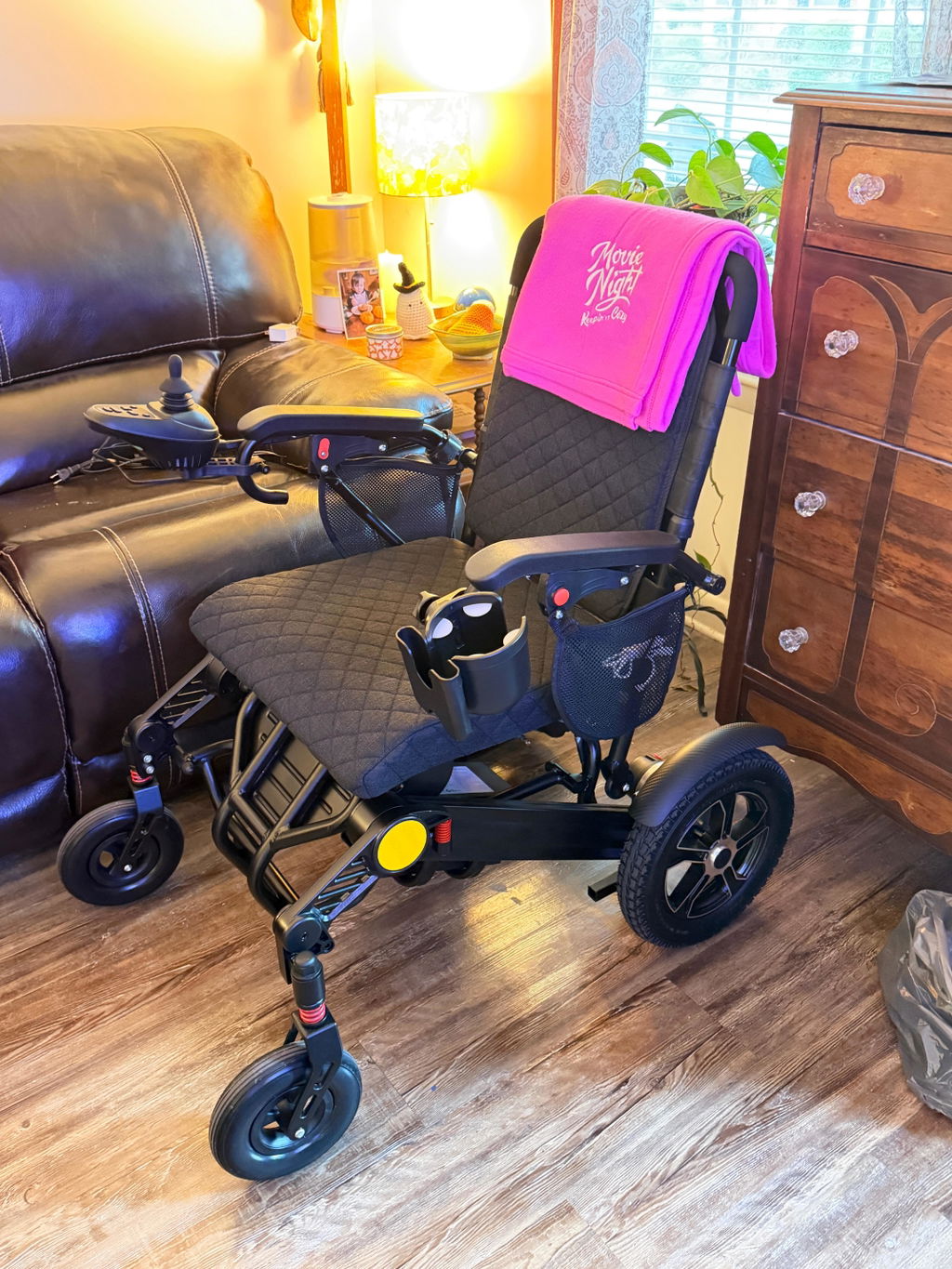
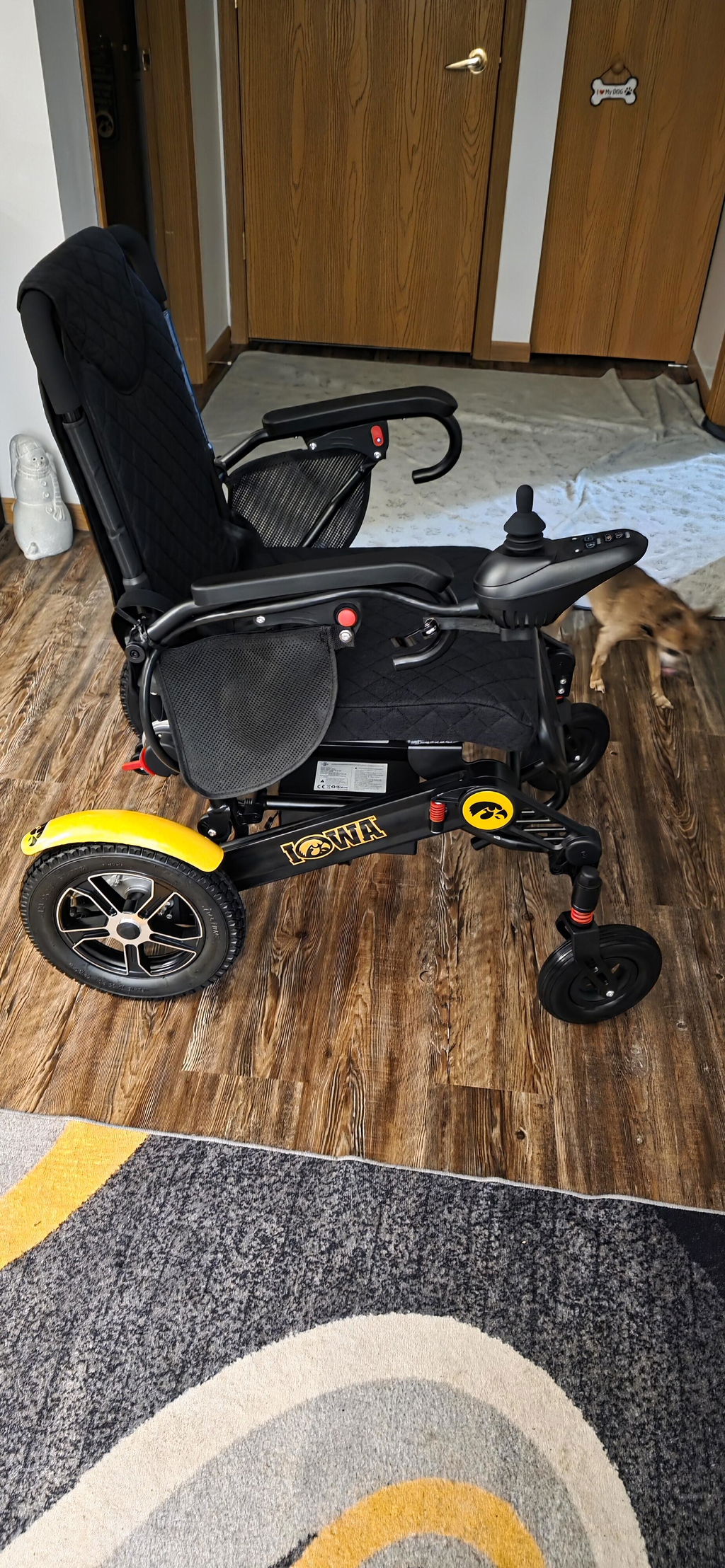
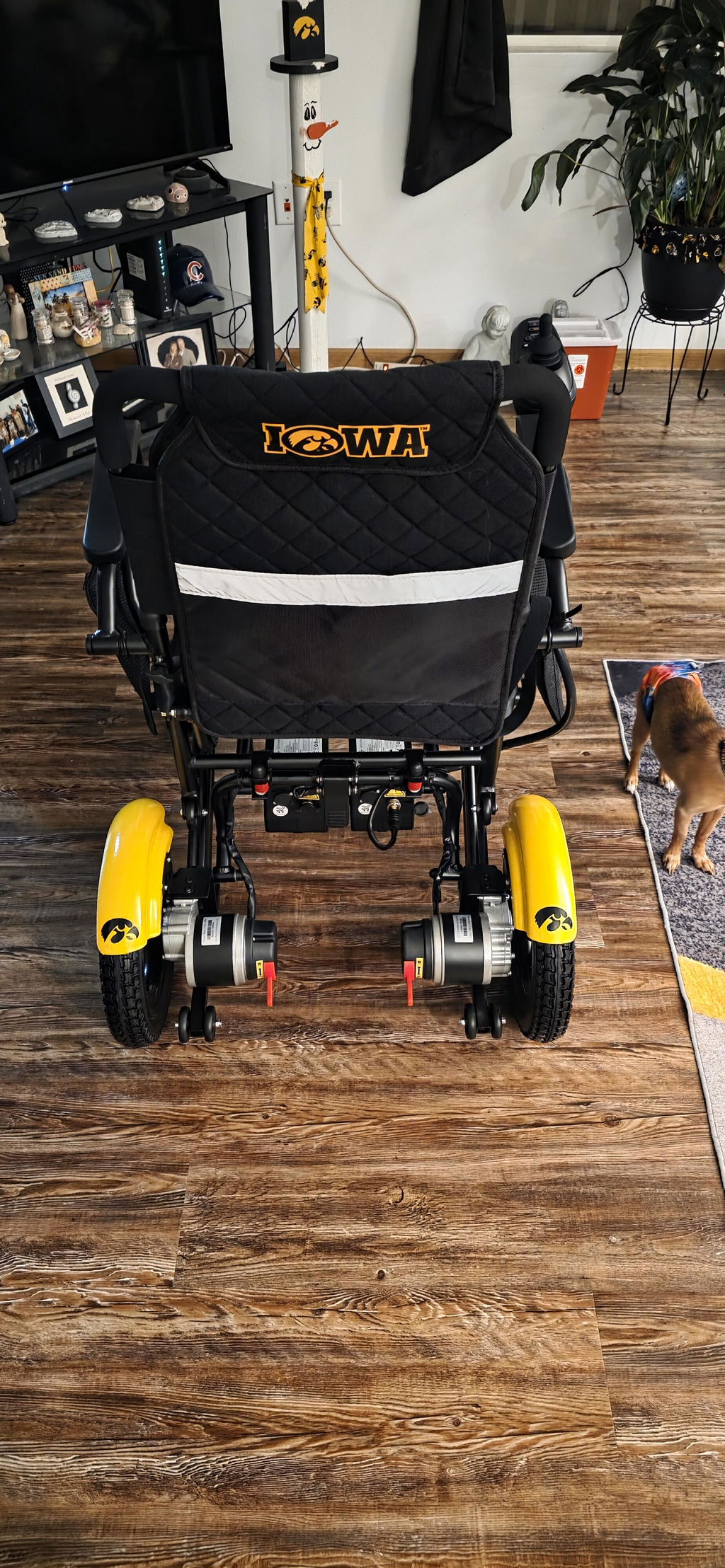
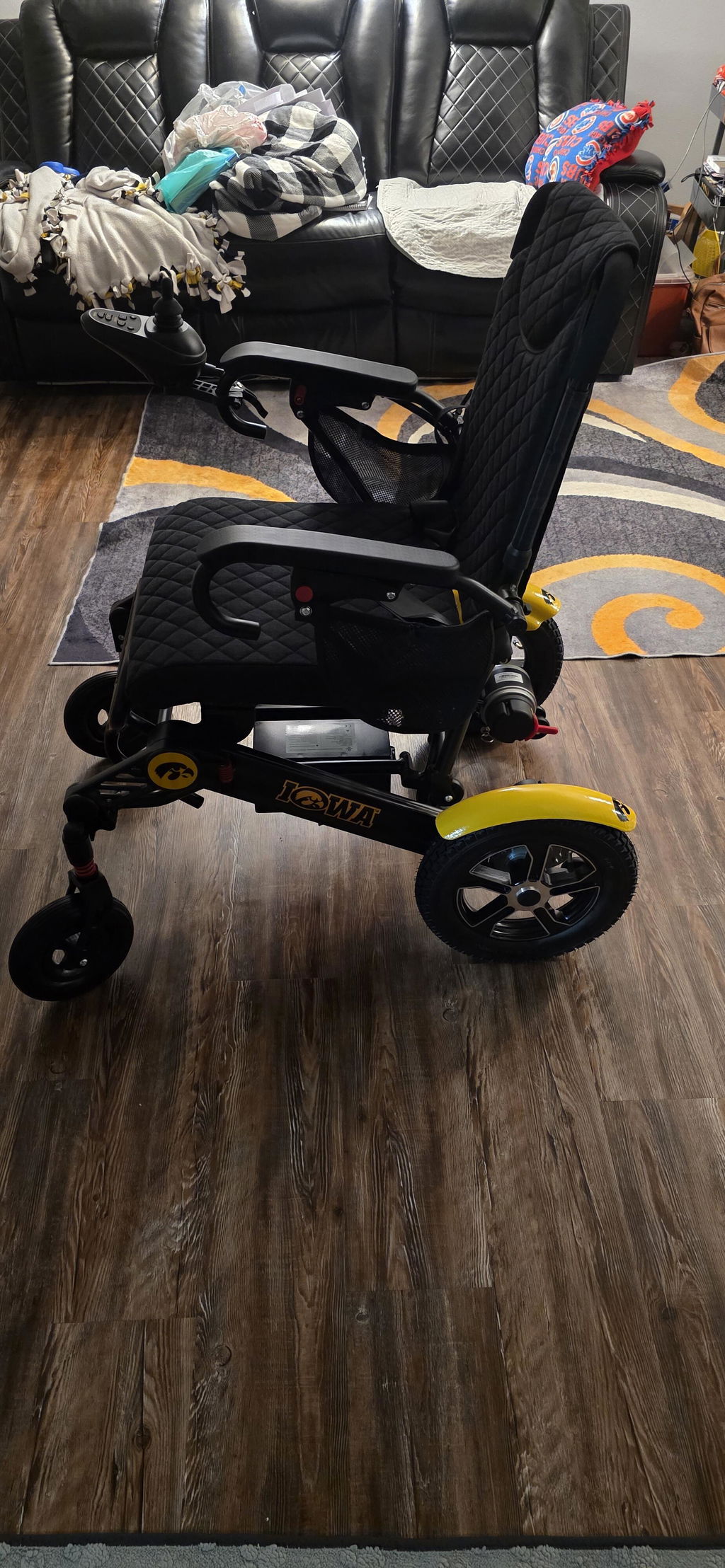
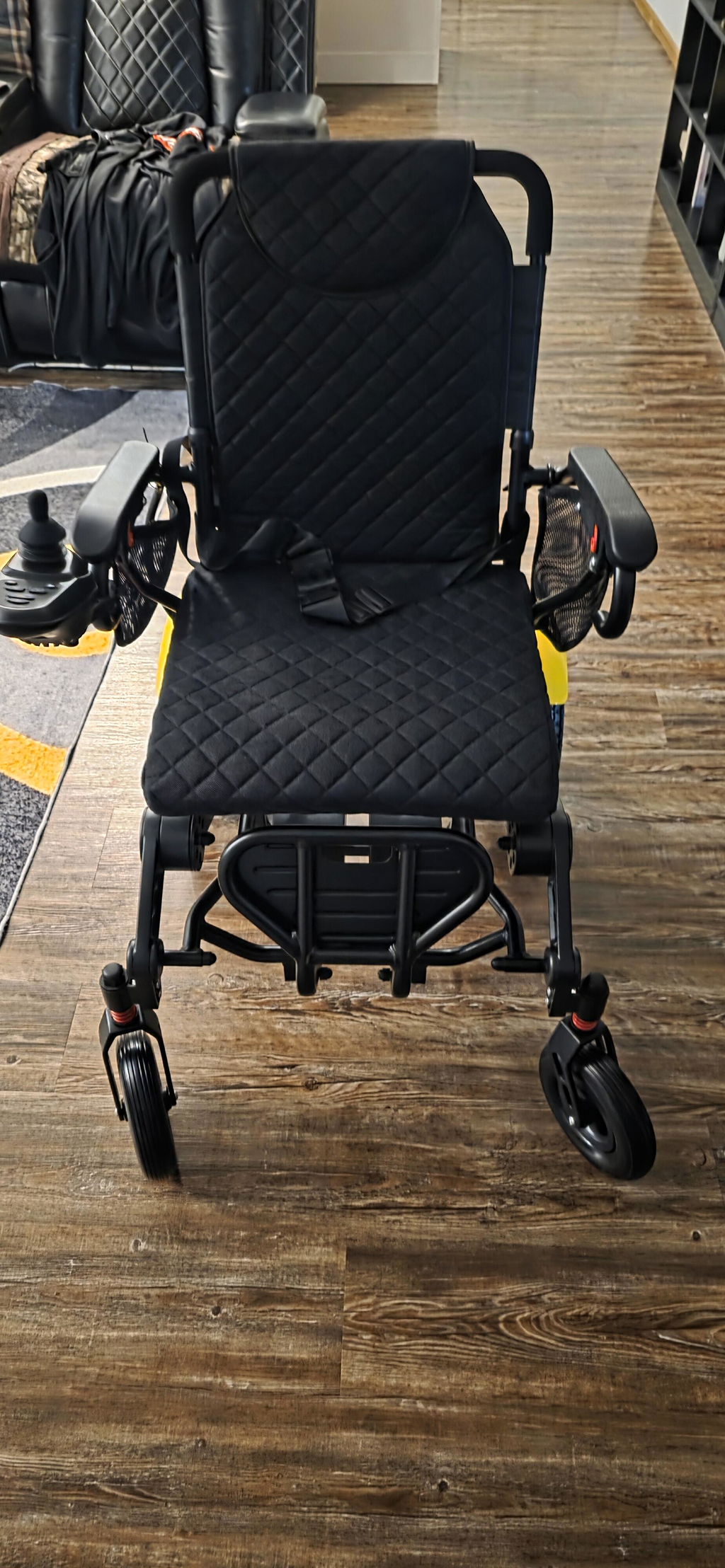
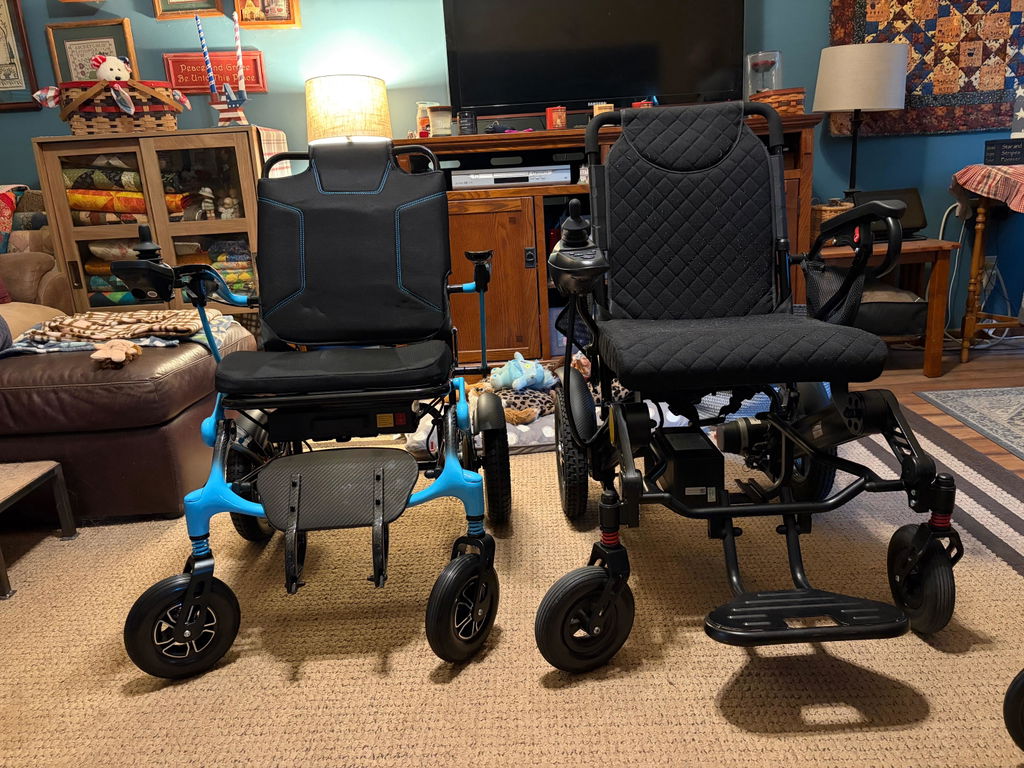
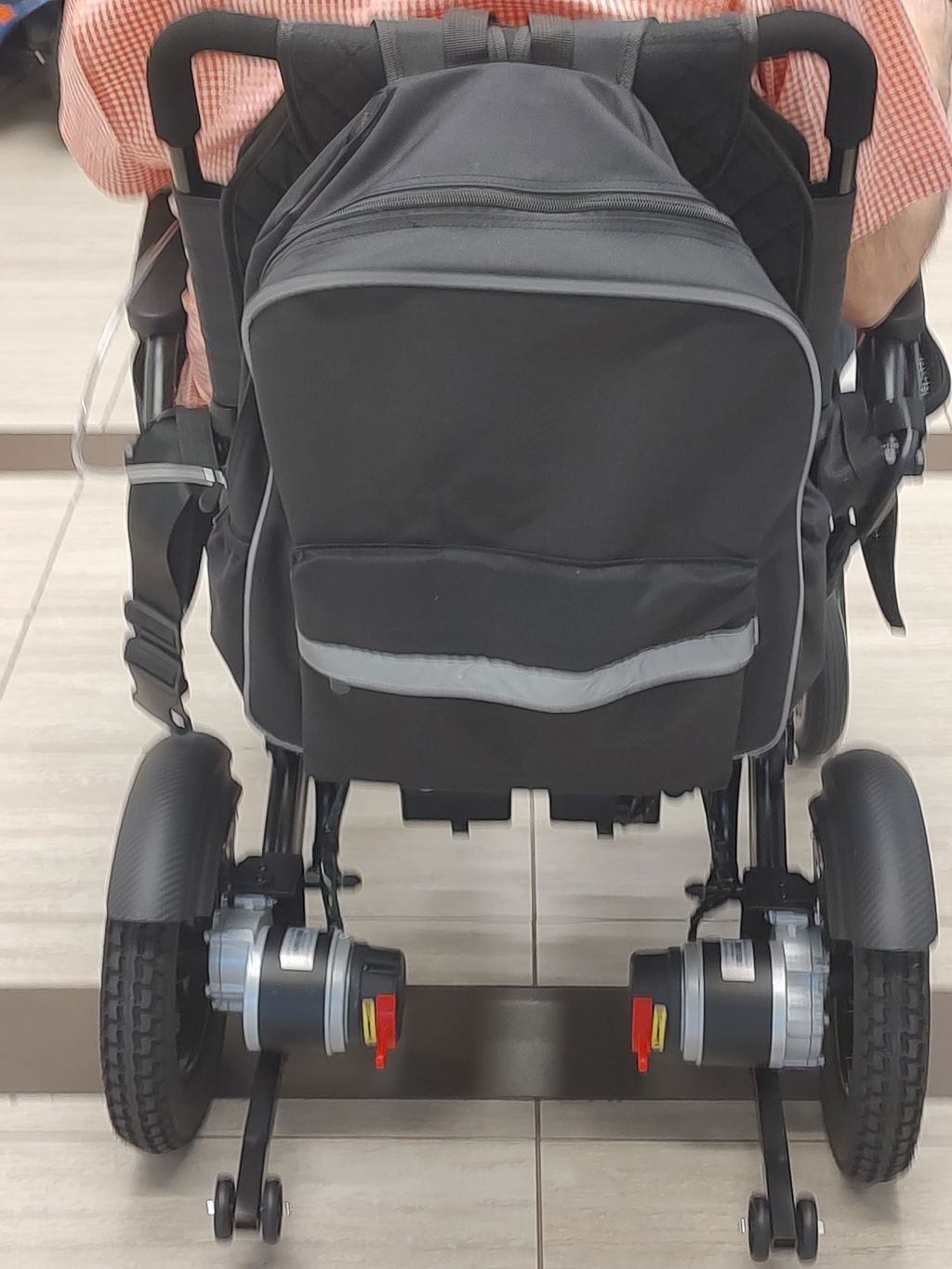
For a measured portable-outing example, the Kerdom DX07 lists a 25-inch unfolded width, a 36.5-pound frame weight without the battery, and folded dimensions of 29 by 14 by 23 inches. Measure the vehicle opening and restaurant route against the chair’s actual operating dimensions; a folding frame does not mean a narrower in-use chair.
If seated fit is the bigger consideration, the Kerdom DX06 lists an 18.5-inch seat width and a 25-inch unfolded width. Those are product facts, not a promise of individual fit or restaurant clearance. Compare your actual overall width and seated needs with the route and table. An occupational therapist (OT) or physical therapist (PT) can help when seating, posture, sensation, or skin concerns make an individual assessment important.
Measure the chair you use and the route you expect to take before making dining plans around a new outing.
FAQs about wheelchair accessible restaurants
How can I tell if a restaurant is truly wheelchair accessible?
Think through the connected route: arrival, entrance, dining-height table, restroom, and patio if you want to use it. A listing can help you find a candidate, but a detailed reservation call gives you information about the chair you use and the time you plan to visit.
What table should I request if I use a wheelchair?
Request a dining-height table rather than bar seating, with a removable chair and open space beneath it. Ask whether the base blocks your knees or footrests and whether the table is on the main accessible level.
Are restaurant patios required to be wheelchair accessible?
The ADA Standards address an accessible route to outdoor dining areas in new construction, subject to stated exceptions that can apply in certain alteration situations. A patio’s layout can still change quickly, so ask about the current path, surface, crowding, and table setup.
What should I ask about an accessible restaurant restroom?
Ask whether the route from your reserved table is open, level, and clear of service traffic or temporary furniture. It is also helpful to ask about an interior door, threshold, or tight turn. Those details are more useful than relying on the phrase “accessible restroom” alone.
Can I charge my power wheelchair at a restaurant?
Treat charging as a backup option only after staff confirm a safe location and you can use the manufacturer-specified charger without crossing an aisle or obstructing access. Plan to leave with enough power for the return rather than assuming a restaurant outlet will be available.
The next time you are choosing wheelchair accessible restaurants, let the reservation do some of the work for you. Search for a few options, make the short call, and reserve the table that fits the evening you want. When you are comparing chair dimensions for future outings, browse Kerdom’s electric wheelchair collection.