

Electric Wheelchair for Home Use: Complete Indoor Guide
Choosing an electric wheelchair for home use requires a different set of priorities than selecting one for outdoor or travel purposes. Indoor environments present unique challenges — narrow doorways, tight hallways, furniture-filled rooms, and flooring transitions — that demand specific wheelchair characteristics. This comprehensive guide covers everything you need to know about using an electric wheelchair for home use, from minimum space requirements and room-by-room accessibility tips to the best compact models designed specifically for indoor navigation. Whether you are evaluating whether a power wheelchair will work in your home or optimizing your current setup, this electric wheelchair for home use guide provides the practical measurements, product recommendations, and modification advice you need.
Can You Use an Electric Wheelchair Indoors?
Yes, modern electric wheelchairs are absolutely suitable for indoor use, and many models are specifically designed with home environments in mind. The key question is not whether an electric wheelchair for home use is possible, but whether your specific home can accommodate one — and what modifications, if any, might be needed.
The primary factors that determine indoor wheelchair compatibility are doorway width, hallway width, turning space, and flooring type. Most homes built after 1990 in the United States have doorways wide enough for a standard electric wheelchair, but older homes and apartments may require modifications. According to the ADA Standards for Accessible Design, a minimum 32-inch clear doorway width is recommended for wheelchair access 1. The good news is that compact electric wheelchairs designed for home use have become significantly smaller and more maneuverable in recent years, with some models offering turning radii as tight as 20 inches.
An electric wheelchair for home use offers transformative benefits for indoor mobility. Users report dramatically increased independence in daily activities — cooking, personal hygiene, reaching items, and moving between rooms — compared to manual wheelchairs or walkers. The powered assistance eliminates the upper body fatigue that limits manual wheelchair users, allowing longer periods of active engagement throughout the day.
Space Requirements for Electric Wheelchair Home Use
Understanding the specific space requirements is the most critical step in evaluating whether an electric wheelchair for home use will work in your living environment. The following measurements represent minimum standards based on ADA guidelines and practical wheelchair dimensions 2.
Doorway Width Requirements
Doorway width is typically the most restrictive factor for an electric wheelchair for home use. Standard residential doorways in the United States measure 28-32 inches wide, while the ADA recommends a minimum clear opening of 32 inches for wheelchair access.
|
Doorway Type |
Typical Width |
Wheelchair Compatible? |
Notes |
|
Standard interior |
28-30 inches |
Tight fit for most models |
May need widening |
|
Newer construction |
32-34 inches |
Yes, most models fit |
ADA minimum met |
|
Bathroom door |
24-28 inches |
Often too narrow |
Priority for modification |
|
Front/back door |
34-36 inches |
Yes, all models fit |
Usually adequate |
|
Sliding glass door |
36-72 inches |
Yes |
Threshold may need ramp |
Most compact electric wheelchairs designed for home use measure 22-25 inches in overall width. This means a 28-inch doorway provides only 1.5-3 inches of clearance on each side — technically passable but requiring precise navigation. For comfortable daily use, this electric wheelchair for home use guide recommends a minimum doorway width of 30 inches, with 32+ inches being ideal.
If your doorways are too narrow, several solutions exist. Offset hinges ($15-$30 per door) add 1.5-2 inches of clear width by swinging the door completely out of the doorway opening. Pocket doors or barn-style sliding doors eliminate the door swing entirely, maximizing the available opening width. Full doorway widening ($200-$500 per door) is the most effective but most expensive option. See our wheelchair accessible home modifications guide for detailed renovation advice.
Hallway and Turning Space
Hallways must be wide enough for the wheelchair to travel straight (minimum 36 inches) and for 90-degree turns at intersections (minimum 36 x 36 inch clear space). A 180-degree turn (U-turn) requires a minimum 60-inch diameter clear space, though mid-wheel drive wheelchairs with tight turning radii can manage in smaller spaces.
|
Maneuver |
Minimum Space Required |
Recommended Space |
|
Straight travel |
36 inches wide |
42 inches wide |
|
90-degree turn |
36 x 36 inches |
42 x 42 inches |
|
180-degree turn (U-turn) |
60-inch diameter circle |
66-inch diameter circle |
|
T-turn (3-point turn) |
36 x 60 inches |
42 x 66 inches |
|
Passing another person |
48 inches wide |
54 inches wide |
Room-by-Room Space Guide
Each room in your home has specific space requirements for comfortable electric wheelchair for home use. The following guide addresses the most common rooms and their unique challenges.
Living Room: Arrange furniture to create a clear pathway at least 36 inches wide between seating areas, entertainment centers, and doorways. Remove or secure area rugs that can bunch under wheelchair wheels. Ensure at least one seating position allows the wheelchair user to transfer to a sofa or recliner if desired, with 36 inches of clear space beside the transfer point.
Dining Room: Standard dining tables are 28-30 inches high, which accommodates most wheelchair users. However, table legs and pedestal bases can interfere with wheelchair footrests. A table with a single center pedestal or widely spaced legs provides the best wheelchair access. Allow 36 inches of clear space around the table for wheelchair circulation.
Bedroom: Position the bed so the wheelchair can approach from the user's preferred transfer side with at least 36 inches of clear space. A bed height of 19-21 inches (matching the wheelchair seat height) facilitates the easiest transfers. Ensure the closet is accessible — a reach-in closet with a lowered rod (48 inches from the floor) is more wheelchair-friendly than a walk-in closet with a narrow doorway.
Best Electric Wheelchairs for Home Use
Not all electric wheelchairs perform equally in indoor environments. The best electric wheelchair for home use models combine compact dimensions, tight turning radius, and smooth indoor performance. The following comparison highlights the top models for indoor use in 2026.
|
Model |
Overall Width |
Turning Radius |
Weight |
Drive Type |
Price |
|
22 inches |
22 inches |
33 lbs |
Rear-wheel |
$769 |
|
|
29 inches |
22 inches |
36.5 lbs |
Rear-wheel |
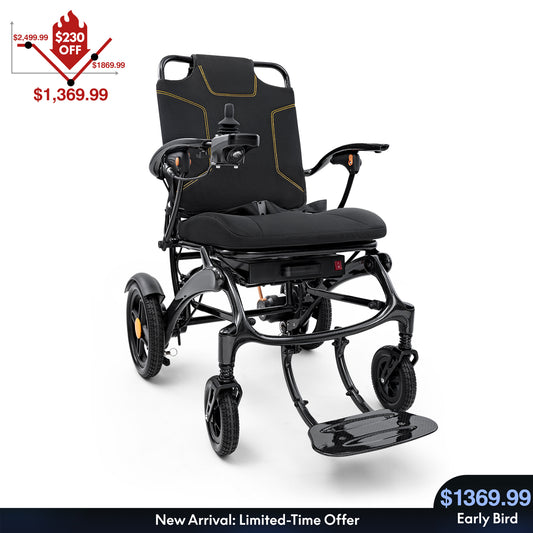
$1,369 |
|
|
24.8 inches |
22 inches |
25.8 lbs |
Rear-wheel |
$1,769 |
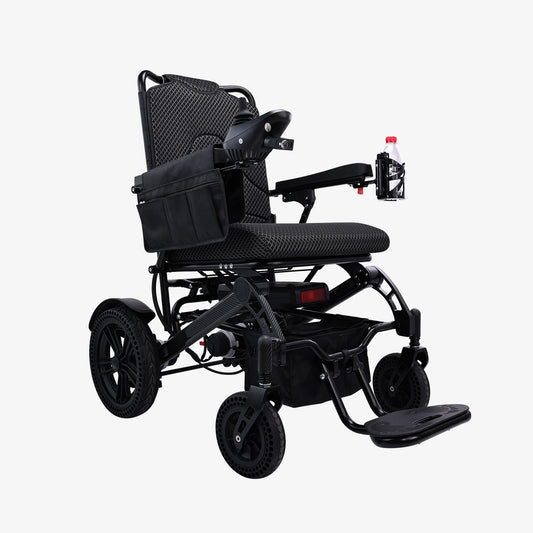
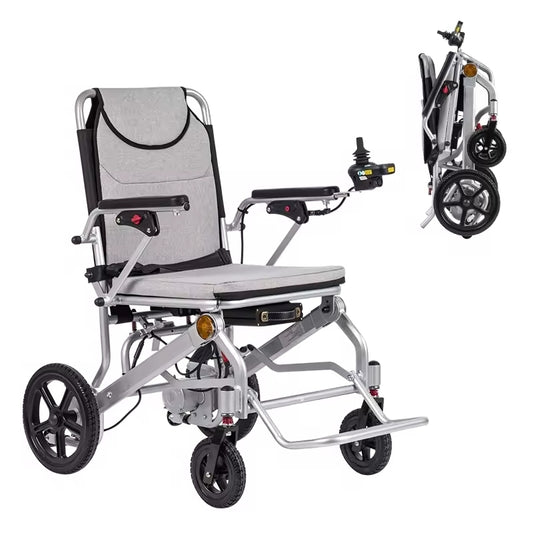
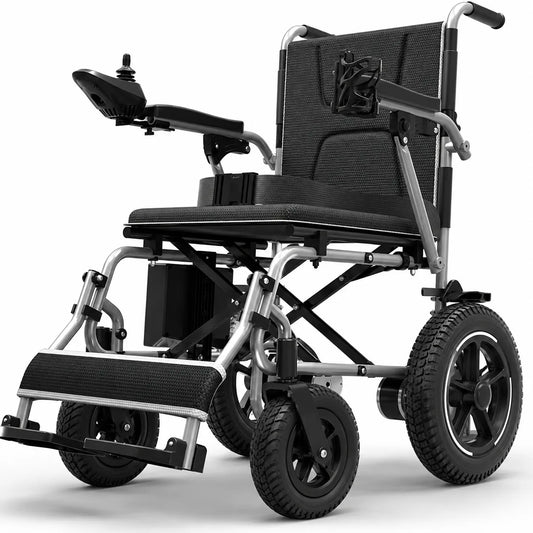
The KERDOM DX04 offers the best combination of compact dimensions and affordability for an electric wheelchair for home use. At just 22 inches wide, it fits through standard 28-inch doorways with over 2 inches of clearance on each side. Its 22-inch turning radius allows U-turns in spaces as small as 46 inches — well within the capability of most hallways and rooms.
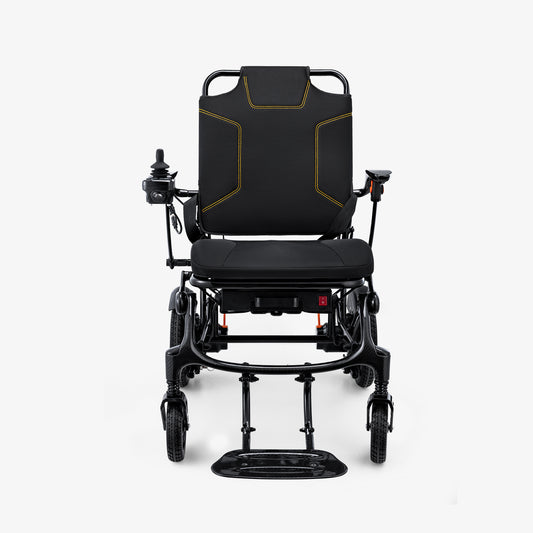
The KERDOM DX07 provides premium indoor performance with its carbon fiber frame and 22-inch turning radius — the tightest in the KERDOM lineup. Despite being slightly wider than the DX04, its exceptional maneuverability makes it feel more agile in tight spaces. The ultralight 36.5-pound weight also makes it easy to move manually when needed.
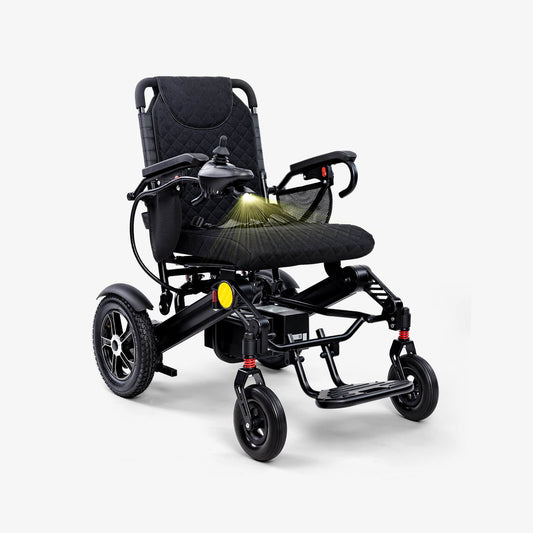
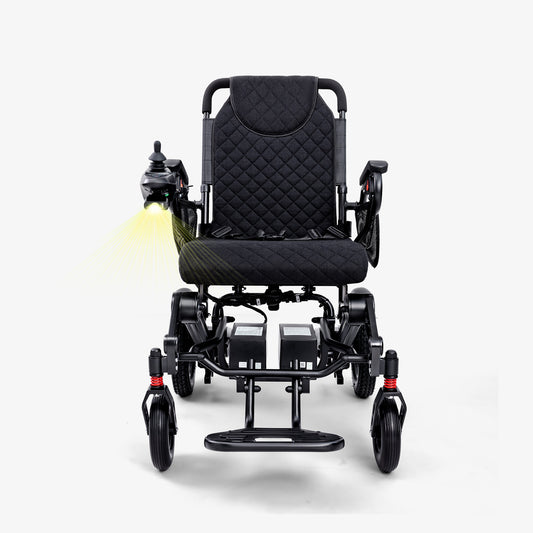
For users who need both indoor capability and outdoor performance, the KERDOM DX05 offers the best versatility. Its 29-inch width fits through 30+ inch doorways, while its all-terrain suspension and 20-mile range handle outdoor excursions with confidence. See our electric wheelchair buying guide for a complete comparison of all models.
Tips for Using Electric Wheelchair at Home
Practical daily tips make a significant difference in how effectively you can use an electric wheelchair for home use. The following room-specific advice comes from occupational therapists and experienced wheelchair users.
Kitchen Accessibility
The kitchen is often the most challenging room for an electric wheelchair for home use due to the need to access countertops, appliances, and storage at various heights. Standard kitchen countertops are 36 inches high, which is accessible for most wheelchair users for food preparation but may be too high for comfortable extended work.
Practical kitchen tips include: install a pull-out cutting board at 30-34 inches height for a comfortable work surface; use a lazy Susan in corner cabinets to bring items within reach; store frequently used items in lower cabinets (below 48 inches); use a reacher/grabber tool for items on upper shelves; consider a side-opening oven or microwave at counter height to avoid reaching over hot surfaces; and ensure at least 40 inches of clear floor space in front of the stove, sink, and refrigerator for wheelchair positioning.
Bathroom Safety
The bathroom requires the most careful planning for an electric wheelchair for home use due to the combination of water, hard surfaces, and transfer requirements. Many wheelchair users transfer to a shower chair or bath bench rather than using the wheelchair in the wet area.
Key bathroom considerations include: ensure the bathroom doorway is at least 32 inches wide (bathroom doors are often the narrowest in the home); install grab bars beside the toilet and in the shower/tub area; consider a roll-in shower with a fold-down bench for the most accessible bathing option; use a raised toilet seat (17-19 inches) to match wheelchair seat height for easier transfers; and install non-slip flooring throughout the bathroom.
Bedroom Setup
An optimized bedroom setup for an electric wheelchair for home use focuses on transfer ease and nighttime accessibility. Position the bed so the wheelchair can park parallel to the bed on your preferred transfer side, with the wheelchair seat at the same height as the mattress top.
Nighttime considerations include: keep a clear, well-lit path between the bed and bathroom; install motion-activated night lights along the path; ensure the wheelchair charging station is accessible from the bed (so you can plug in before sleeping); and keep a phone within reach of the bed for emergencies.
Home Modifications for Electric Wheelchair Users
While many homes can accommodate an electric wheelchair for home use with minimal changes, strategic modifications can dramatically improve accessibility and quality of life. The following modifications are listed in order of impact and cost-effectiveness.
|
Modification |
Cost |
Impact |
DIY Possible? |
|
Offset door hinges |
$15-$30/door |
Adds 1.5-2" doorway width |
Yes |
|
Threshold ramps |
$20-$60 each |
Eliminates tripping hazards |
Yes |
|
Lever door handles |
$15-$30/door |
Easier to open from wheelchair |
Yes |
|
Remove area rugs |
Free |
Eliminates wheel snags |
Yes |
|
Grab bars (bathroom) |
$30-$100 each |
Critical transfer safety |
Moderate |
|
Raised toilet seat |
$30-$80 |
Easier transfers |
Yes |
|
Pocket/barn doors |
$150-$400/door |
Maximizes doorway width |
Professional recommended |
|
Doorway widening |
$200-$500/door |
Permanent solution |
Professional required |
|
Roll-in shower |
$3,000-$8,000 |
Most accessible bathing |
Professional required |
|
Ramp (entrance) |
$1,000-$3,000 |
Independent home entry/exit |
Professional recommended |
For a comprehensive guide to home modifications including funding sources, grants, and tax deductions, see our wheelchair accessible home modifications guide.
Frequently Asked Questions
Can I use an electric wheelchair inside my home?
Yes, modern compact electric wheelchairs are well-suited for home use. The key requirement is that your doorways are at least 28-30 inches wide (32+ inches is ideal). Models like the KERDOM DX04 (22 inches wide) and DX07 (29 inches wide) are specifically designed with indoor dimensions that fit through standard residential doorways. Before purchasing, measure your narrowest doorway and compare it to the wheelchair's overall width, allowing at least 2 inches of total clearance.
What is the best electric wheelchair for small homes?
For small homes and apartments, the best electric wheelchair for home use is one with a compact width (under 24 inches) and a tight turning radius (under 24 inches). The KERDOM DX04 excels in this category at 22 inches wide with a 22-inch turning radius, allowing navigation through standard doorways and U-turns in most hallways. Its lightweight 33-pound frame also makes it easy to store in a closet when not in use.
How wide do doorways need to be for an electric wheelchair?
The ADA recommends a minimum clear doorway width of 32 inches for wheelchair access. However, compact electric wheelchairs for home use (22-25 inches wide) can navigate doorways as narrow as 28 inches with careful driving. For comfortable daily use without the stress of precise navigation, 30+ inches is recommended. If your doorways are too narrow, offset hinges ($15-$30 per door) can add 1.5-2 inches of clear width without structural modifications.
Will an electric wheelchair damage my floors?
Electric wheelchairs with pneumatic (air-filled) tires are gentle on most flooring types, including hardwood, tile, and laminate. Solid rubber tires may leave scuff marks on light-colored floors, especially during tight turns. To minimize floor wear, maintain proper tire pressure, avoid spinning the wheels in place, and clean the tires regularly. Thick carpet (pile height over 0.5 inches) can be difficult for electric wheelchairs to navigate and may cause increased battery drain.
How do I charge my electric wheelchair at home?
Most electric wheelchairs charge via a standard household outlet (110V/120V). Set up a dedicated charging station near your bed or primary seating area where you can easily plug in the charger. Charge the battery after each day's use — most lithium-ion batteries charge fully in 4-6 hours. Avoid charging in extremely hot or cold locations (garages in summer/winter). See our electric wheelchair battery life tips for detailed charging best practices.
What flooring is best for electric wheelchair use at home?
Hard, smooth flooring surfaces are ideal for an electric wheelchair for home use. Hardwood, laminate, vinyl plank, and tile all provide low rolling resistance and easy maneuverability. Low-pile commercial carpet (pile height under 0.5 inches) is acceptable. Avoid thick carpet, shag carpet, and loose area rugs, which increase rolling resistance, drain batteries faster, and can catch in the wheels. If you have area rugs you want to keep, secure them with double-sided carpet tape to prevent bunching.
Do I need a ramp to enter my home with an electric wheelchair?
If your home entrance has one or more steps, a ramp is essential for independent entry and exit with an electric wheelchair. For a single step (up to 6 inches), a portable threshold ramp ($60-$100) may suffice. For multiple steps, a permanent ramp or modular ramp system ($1,000-$3,000) provides the safest solution. The ramp slope should not exceed 1:12 ratio (1 inch of rise per 12 inches of ramp length) per ADA guidelines. See our 6 Feet Lightweight Foldable Wheelchair Ramp for more ramp details.









No comments





0 comments