

Best Outdoor Electric Wheelchair: All-Terrain Guide
Finding the best outdoor electric wheelchair opens up a world of freedom that indoor-only models simply cannot provide. Parks, nature trails, neighborhood sidewalks, farmers' markets, and family gatherings in the backyard all become accessible when your electric wheelchair is built for outdoor terrain. However, not every power wheelchair performs equally once it leaves smooth indoor floors. The difference between a frustrating outdoor experience and an enjoyable one comes down to specific engineering features — tire type, suspension quality, motor power, ground clearance, and battery range. This guide examines every factor that determines outdoor performance, compares the top-rated all-terrain models available in 2026, and provides terrain-specific advice so you can confidently navigate grass, gravel, hills, and more.
What Makes an Outdoor Electric Wheelchair Different?
An outdoor electric wheelchair differs from an indoor model in five critical engineering areas. Understanding these differences is essential for selecting the best outdoor electric wheelchair for your specific needs, because a wheelchair that excels indoors may struggle or even become unsafe on outdoor terrain.
The first and most important difference is tire construction. Indoor wheelchairs typically use solid rubber tires that provide a smooth, maintenance-free ride on hard floors but transmit every bump and crack directly to the rider outdoors. Outdoor wheelchairs use pneumatic (air-filled) tires that absorb terrain irregularities, providing dramatically better comfort and traction on uneven surfaces. The second critical difference is suspension, which further dampens vibration and impact from rough ground. The third is motor power — outdoor terrain requires more torque to climb hills, push through soft ground, and maintain speed on uneven surfaces. The fourth is ground clearance, which determines whether the wheelchair can pass over obstacles like curbs, roots, and uneven pavement joints without getting stuck. The fifth is battery range, since outdoor excursions typically cover greater distances than indoor movement 1.
Tire Types: Pneumatic vs Solid vs Foam-Filled
The tire type on your outdoor electric wheelchair has the single greatest impact on ride quality, traction, and terrain capability. Each type offers distinct advantages and trade-offs that affect your outdoor experience.
|
Tire Type |
Ride Comfort |
Traction |
Maintenance |
Puncture Risk |
Best For |
|
Pneumatic (air-filled) |
Excellent |
Excellent |
Medium (pressure checks) |
Yes |
All outdoor terrain |
|
Solid rubber |
Poor |
Fair |
None |
None |
Indoor / smooth pavement only |
|
Foam-filled |
Good |
Good |
None |
None |
Mixed indoor-outdoor use |
|
Knobby pneumatic |
Excellent |
Superior |
Medium |
Yes |
Off-road, trails, grass |
Pneumatic tires are the gold standard for the best outdoor electric wheelchair performance. Like bicycle tires, they contain an air-filled inner tube that compresses over bumps, providing natural shock absorption. The air cushion also increases the tire's contact patch on soft surfaces like grass and gravel, improving traction significantly. The trade-off is maintenance — you need to check tire pressure regularly (every 2-3 weeks) and carry a repair kit for potential punctures.
Suspension Systems Explained
A quality suspension system is the second most important feature of the best outdoor electric wheelchair. Suspension works in conjunction with tires to absorb impacts from uneven terrain, protecting both the rider and the wheelchair's mechanical components from excessive vibration and shock.
Independent front and rear suspension is the premium configuration found on high-end outdoor wheelchairs. Each wheel has its own spring or shock absorber, allowing it to move independently over obstacles. This means that when one wheel hits a bump, the impact is isolated to that wheel rather than transmitted through the entire frame. Independent suspension provides the smoothest ride on rough terrain and is essential for users who plan to navigate trails, grass, or gravel regularly.
Semi-independent suspension uses a shared suspension element (typically a transverse spring or torsion bar) that connects the left and right wheels on one axle. This provides good bump absorption at a lower cost and weight than fully independent systems. Most mid-range outdoor electric wheelchairs use semi-independent rear suspension combined with caster-style front wheels.
Best Outdoor Electric Wheelchairs Compared
The following comparison evaluates the best outdoor electric wheelchair models based on the critical outdoor performance factors discussed above. All specifications are verified against manufacturer data as of March 2026.
|
Feature |
|||
|
Motor Power |
Dual 250W |
Dual 250W |
Dual 180W |
|
Range |
20 miles |
30 miles |
15 miles |
|
Max Speed |
3.73 mph |
4 mph |
3.73 mph |
|
Hill Climbing |
12° slope |
15° slope |
12° slope |
|
Weight |
58 lbs |
58.5 lbs |
36.5 lbs |
|
Outdoor Rating |
★★★★★ |
★★★★★ |
★★★★☆ |
|
Price |
$939 |
$989 |
$1,369 |
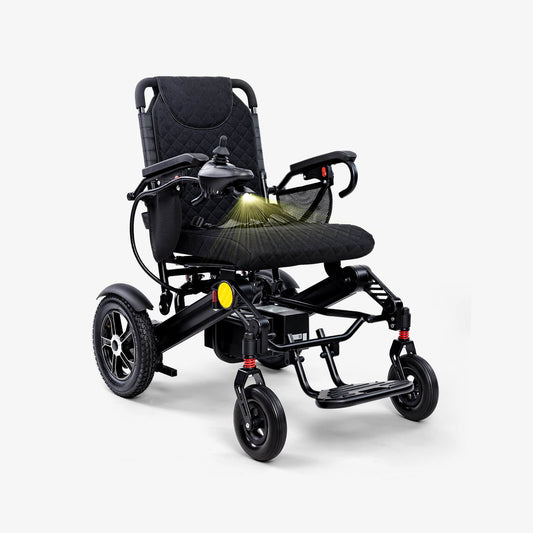
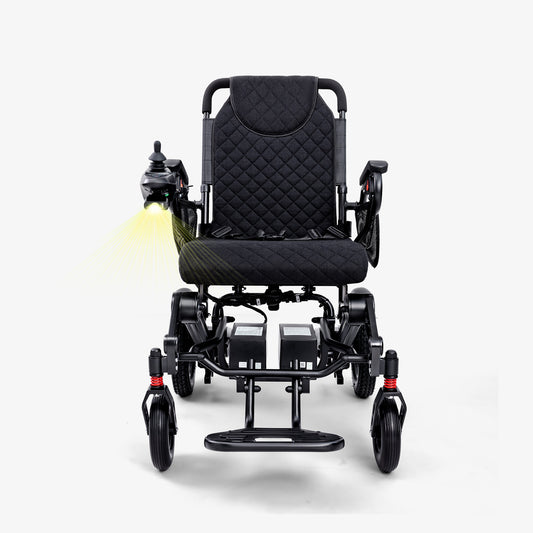
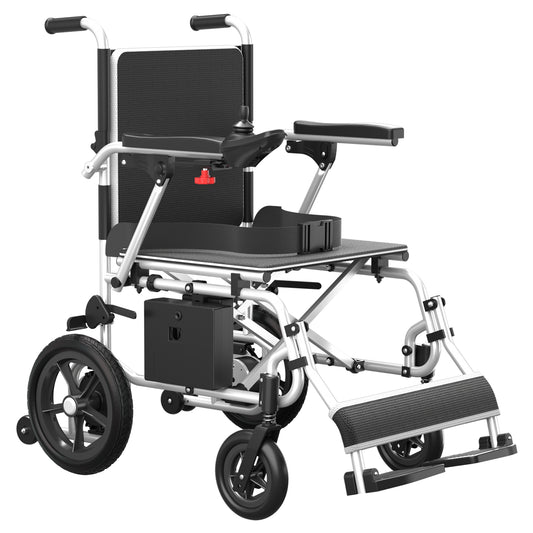
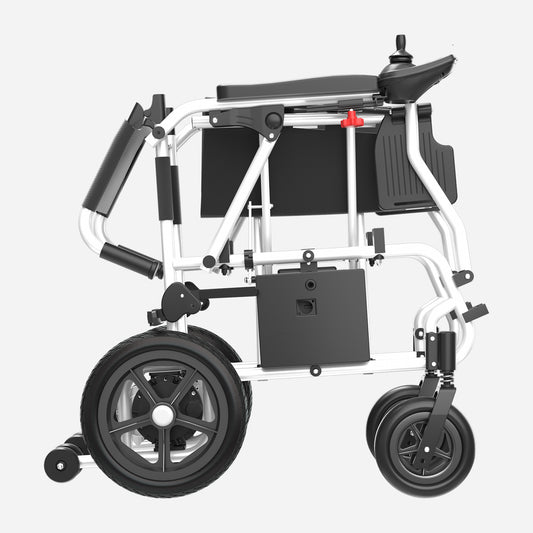
The KERDOM DX05 stands out as the best outdoor electric wheelchair in the KERDOM lineup. Its pneumatic tires, semi-independent suspension combine to deliver confident performance on grass, gravel, and moderate trails. The dual 250W motors provide ample torque for hill climbing up to 12 degrees, and the 20-mile range supports extended outdoor excursions without range anxiety. At $939, it offers exceptional outdoor value.
The KERDOM DX06 stands out as a reliable everyday electric wheelchair in the KERDOM lineup. Equipped with pneumatic tires and dual 250W motors, it delivers smooth performance across urban surfaces like sidewalks and light outdoor terrain. With a top speed of 4 mph and a travel range of up to 30 miles, it’s well-suited for daily commuting and extended outings. The 15° climbing capability ensures steady navigation on inclines, while its 58.5 lbs frame makes it easier to transport and store. Priced at $989, the DX06 offers an excellent balance of portability, performance, and value for everyday use.
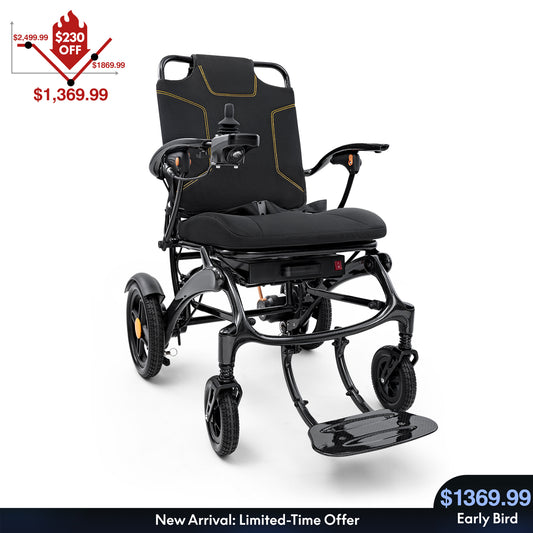
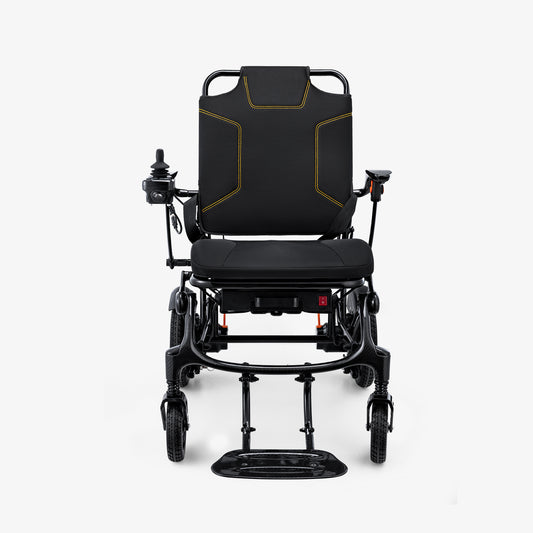
The KERDOM DX07 is the best choice for users who split time between indoor and outdoor use. Its carbon fiber frame keeps weight at just 36.5 pounds for easy transport. It handles park paths, sidewalks, and light grass well, though it is not recommended for rough trails or steep hills.
See our electric wheelchair buying guide for a complete feature-by-feature comparison.
Terrain-by-Terrain Performance Guide
Different outdoor surfaces present unique challenges for electric wheelchairs. The following terrain-specific guide helps you understand what to expect and how to navigate each surface safely with the best outdoor electric wheelchair.
Grass and Park Trails
Grass is one of the most common outdoor surfaces and one that many wheelchair users find surprisingly challenging. Soft, wet, or tall grass increases rolling resistance dramatically — a wheelchair that travels effortlessly on pavement may struggle or stall on thick lawn grass.
For successful grass navigation, an all-terrain power wheelchair should have pneumatic or foam-filled tires (wider is better for weight distribution), at least 200W of motor power per wheel, and a ground clearance of 3.5+ inches. Avoid grass after rain when the ground is soft, as wheels can sink and lose traction. Maintain a steady speed rather than stopping and starting, which causes the wheels to dig into soft ground.
Gravel and Dirt Paths
Gravel paths are common in parks, campgrounds, and rural areas. The challenge with gravel is that loose stones shift under the wheels, reducing traction and creating an unstable surface. Fine, packed gravel (like a well-maintained park path) is significantly easier than loose, coarse gravel (like a freshly graveled driveway).
A capable outdoor power wheelchair for gravel should have wide pneumatic tires with some tread pattern for grip, strong motors to maintain momentum through loose sections, and good suspension to absorb the constant vibration that gravel produces. Drive at a moderate, steady speed — too slow and you lose momentum, too fast and you lose control. Avoid sharp turns on loose gravel, as the wheels may slide sideways.
Hills and Slopes
Hill climbing is where motor power and weight distribution matter most. A reliable all-terrain wheelchair for hills should have a minimum combined motor power of 400W (dual 200W), a hill climbing rating of at least 9 degrees, and anti-tip wheels to prevent backward tipping on steep inclines.
|
Slope Grade |
Difficulty |
Minimum Motor Power |
Safety Notes |
|
0-5° (0-8.7%) |
Easy |
300W total |
Most wheelchairs handle this |
|
5-9° (8.7-15.8%) |
Moderate |
400W total |
Anti-tip wheels recommended |
|
9-12° (15.8-21.3%) |
Challenging |
500W total |
All-terrain model required |
|
12°+ (21.3%+) |
Difficult |
500W+ total |
Professional assessment recommended |
Always approach hills straight on rather than at an angle, which increases tipping risk. When descending, use the wheelchair's speed control or low-speed mode to maintain a safe, controlled descent. Never attempt to descend a steep hill at full speed. For detailed safety guidance, see our electric wheelchair safety tips.
Outdoor Electric Wheelchair Safety Tips
Using your outdoor power wheelchair safely requires awareness of hazards that do not exist indoors. Outdoor environments are unpredictable — weather changes, terrain varies, and obstacles appear without warning.
Pre-trip inspection should become a habit before every outdoor excursion. Check tire pressure (for pneumatic tires), battery charge level, and brake function. Verify that anti-tip wheels are properly adjusted and that all fasteners are tight, as vibration from rough terrain can loosen bolts over time.
Weather awareness is critical for outdoor wheelchair safety. Wet surfaces reduce traction on all tire types, and standing water can damage electrical components. Top-rated outdoor power wheelchair models have IP-rated water resistance (typically IP54 or higher), but no consumer wheelchair is designed for heavy rain or submersion. Wind can also affect stability, particularly for lightweight models. If conditions deteriorate, seek shelter and wait for improvement rather than pushing through dangerous weather.
Visibility is essential when sharing paths with pedestrians, cyclists, and vehicles. Attach LED lights (front white, rear red) and reflective strips to your wheelchair, especially if you plan to be outdoors during dawn, dusk, or overcast conditions. A tall visibility flag helps drivers see you in parking lots and at intersections. According to the National Highway Traffic Safety Administration, wheelchair users are disproportionately represented in pedestrian-vehicle incidents, making visibility a life-safety issue 2.
Weather Protection for Outdoor Wheelchair Use
Protecting both yourself and your wheelchair from weather elements extends the usable outdoor season and prevents costly damage to electrical components.
|
Weather Condition |
Risk to Wheelchair |
Risk to User |
Recommended Protection |
|
Light rain |
Moderate (electrical) |
Low |
Rain cover, poncho |
|
Heavy rain |
High (electrical damage) |
Moderate |
Seek shelter, do not operate |
|
Extreme heat (95°F+) |
Moderate (battery) |
High (heat illness) |
Shade, hydration, limit exposure |
|
Extreme cold (32°F-) |
High (battery capacity drops 20-40%) |
High (hypothermia) |
Insulated battery cover, warm clothing |
|
Snow/ice |
Very high (traction, electrical) |
Very high (falls) |
Avoid if possible |
|
Wind (20+ mph) |
Low |
Moderate (stability) |
Lower speed, wider turns |
Battery performance in cold weather deserves special attention. Lithium-ion batteries lose 20-40% of their capacity in freezing temperatures, significantly reducing your range. If you must use your wheelchair in cold weather, store it indoors overnight (never in an unheated garage), start with a full charge, and plan for reduced range. An insulated battery cover helps maintain battery temperature during cold-weather outings. For more battery care advice, see our electric wheelchair battery life tips.
Frequently Asked Questions
What is the best outdoor electric wheelchair?
The best outdoor electric wheelchair depends on your primary terrain and use case. For all-around outdoor performance including grass, gravel, and hills, the KERDOM DX06 ($989) offers the best combination of pneumatic tires, suspension, 30-mile range, and 15-degree hill climbing capability.
Can I use a regular electric wheelchair outdoors?
Yes, most electric wheelchairs can handle smooth outdoor surfaces like paved sidewalks, level parking lots, and well-maintained paths. However, regular indoor-focused wheelchairs with solid tires and no suspension will provide a rough, uncomfortable ride on uneven surfaces and may struggle or get stuck on grass, gravel, or slopes. For regular outdoor use beyond smooth pavement, investing in the best outdoor electric wheelchair with pneumatic tires and suspension is strongly recommended.
What tire type is best for outdoor electric wheelchairs?
Pneumatic (air-filled) tires provide the best outdoor performance, offering superior shock absorption, traction, and comfort on uneven terrain.
How far can an outdoor electric wheelchair travel on one charge?
Range varies significantly by model, terrain, and conditions. On smooth pavement, the best outdoor electric wheelchair models offer 15-30 miles per charge. On rough terrain (grass, gravel, hills), expect 30-50% range reduction due to increased motor effort. The KERDOM DX05 offers 20 miles on pavement and approximately 13-15 miles on mixed outdoor terrain. Always plan your outdoor route with battery reserve to account for unexpected detours or terrain challenges.
Are outdoor electric wheelchairs waterproof?
Most outdoor electric wheelchairs have some degree of water resistance (typically IP54 rated), meaning they can handle light rain and splashes. However, no consumer electric wheelchair is fully waterproof. Heavy rain, standing water, and submersion can damage motors, controllers, and battery connections. If caught in rain, cover the joystick controller (the most vulnerable component), head for shelter, and dry the wheelchair thoroughly before the next use. Never charge a wet wheelchair.
Can an outdoor electric wheelchair climb hills?
Yes, the best outdoor electric wheelchair models can climb hills of 9-15 degrees (15-21% grade). Hill climbing ability depends on motor power, wheelchair weight, rider weight, tire traction, and battery charge level. Always approach hills straight on, use anti-tip wheels, and maintain a steady speed. Avoid hills steeper than your wheelchair's rated climbing angle, as this can cause motor overheating, loss of traction, or tipping. See our electric wheelchair safety tips for detailed hill navigation advice.




No comments





0 comments