
November 25, 2026 · KERDOM Editorial Team
Power Wheelchair Battery Care: Charging, Storage & Safety
Good power wheelchair battery care is mostly about habits, not tools. Charge after you ride, use the right charger, and keep the pack out of the heat. Do that and your electric wheelchair will give you predictable range for years instead of surprising you halfway through a trip to the store.
This guide covers the everyday routine: how to charge, whether to leave the chair plugged in, how to store the battery, what airlines expect, and the warning signs that mean it’s time to stop and call for help. Your owner’s manual always comes first for your exact model.
Praised by the Press
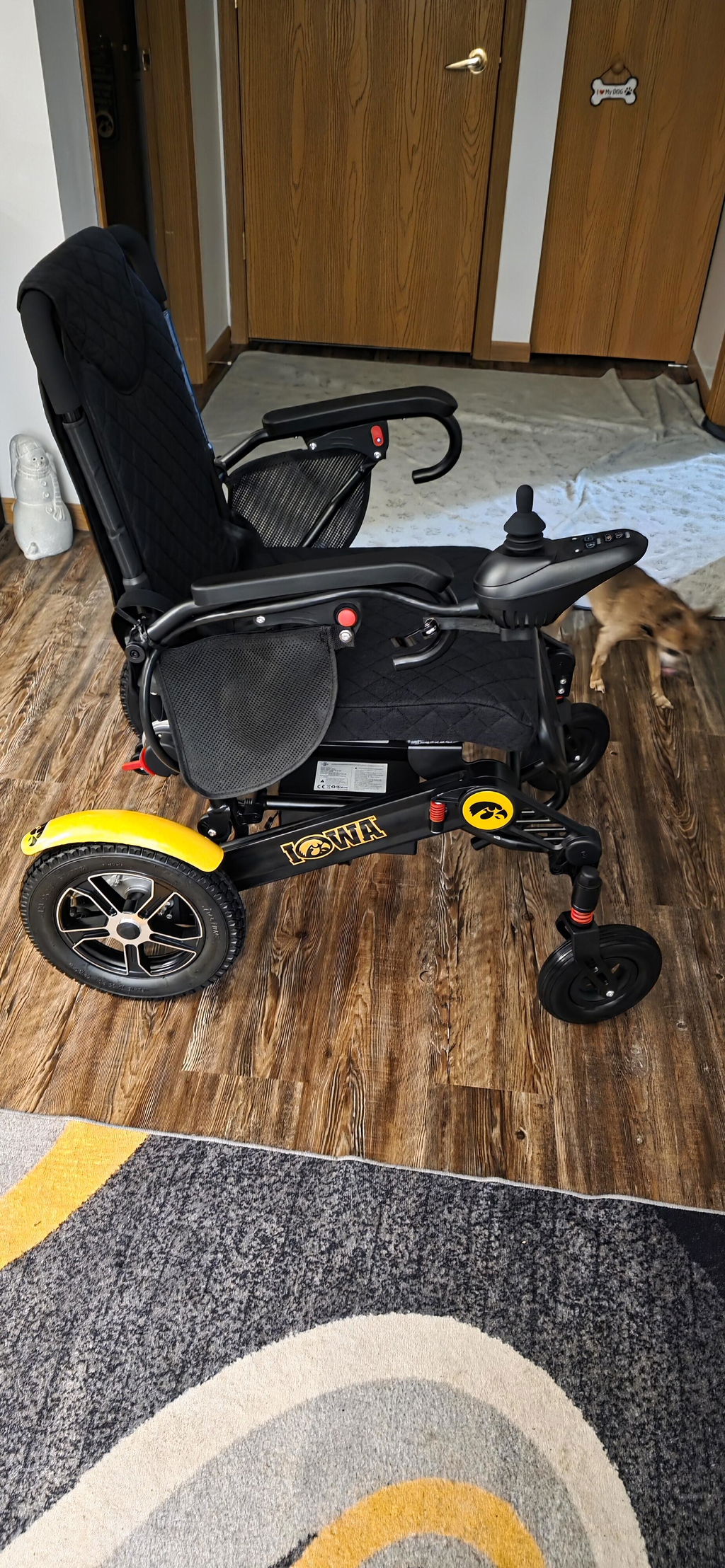
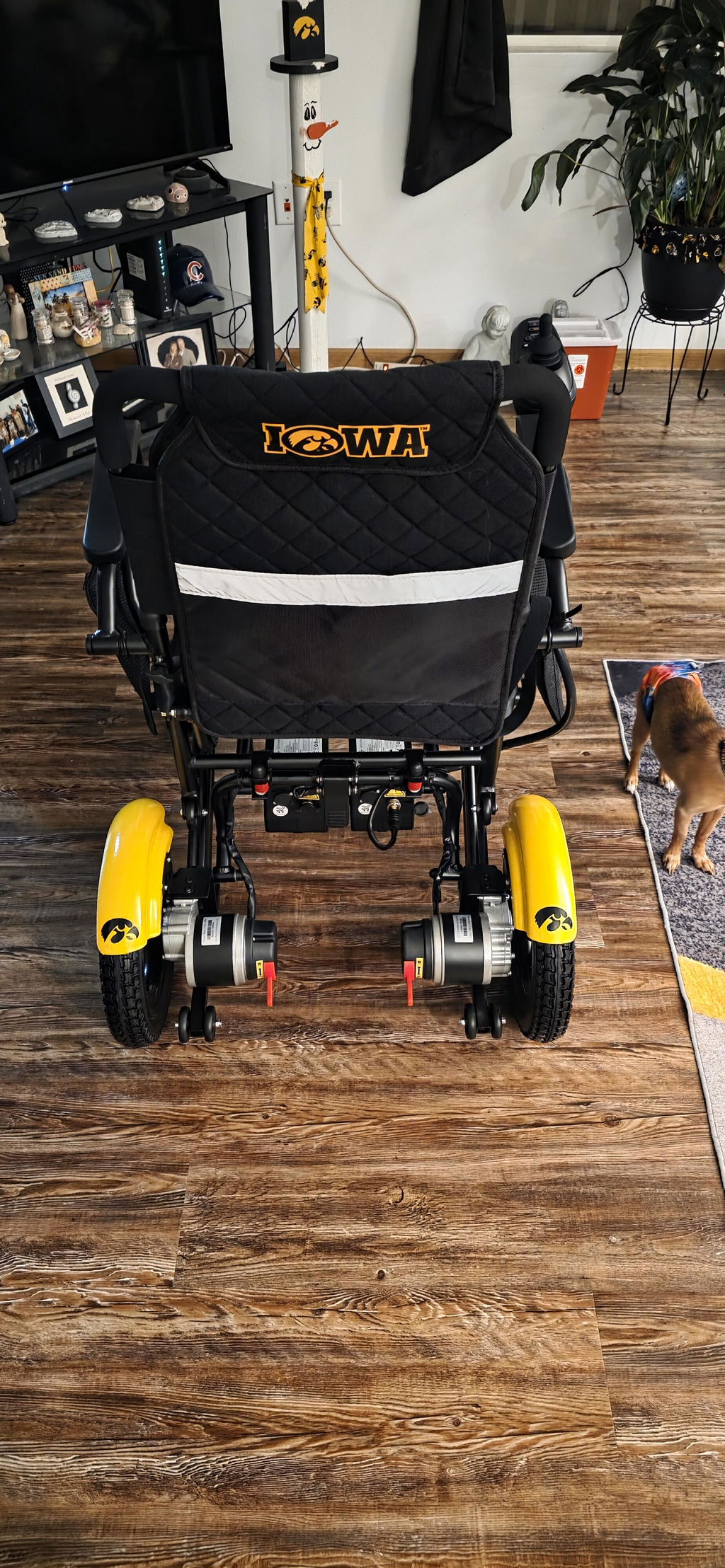
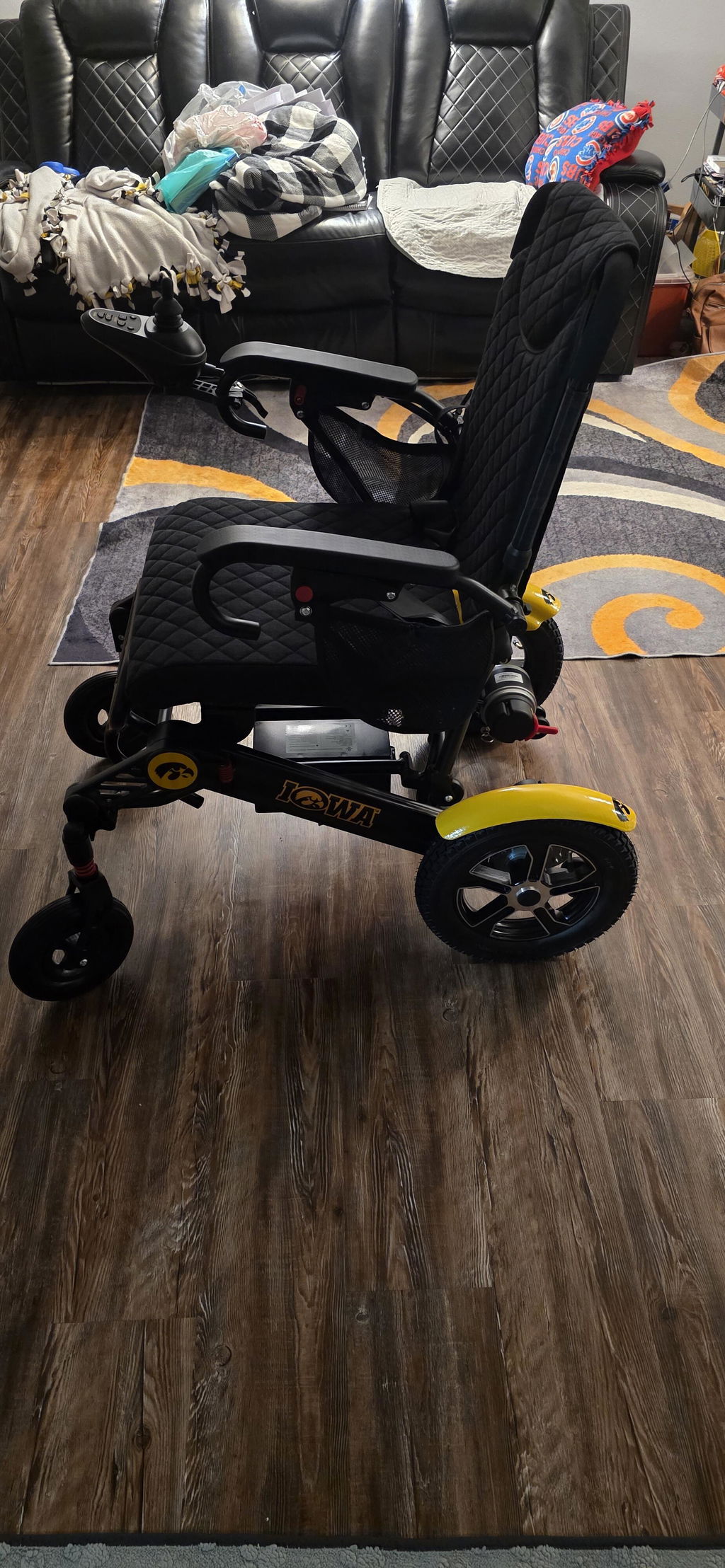
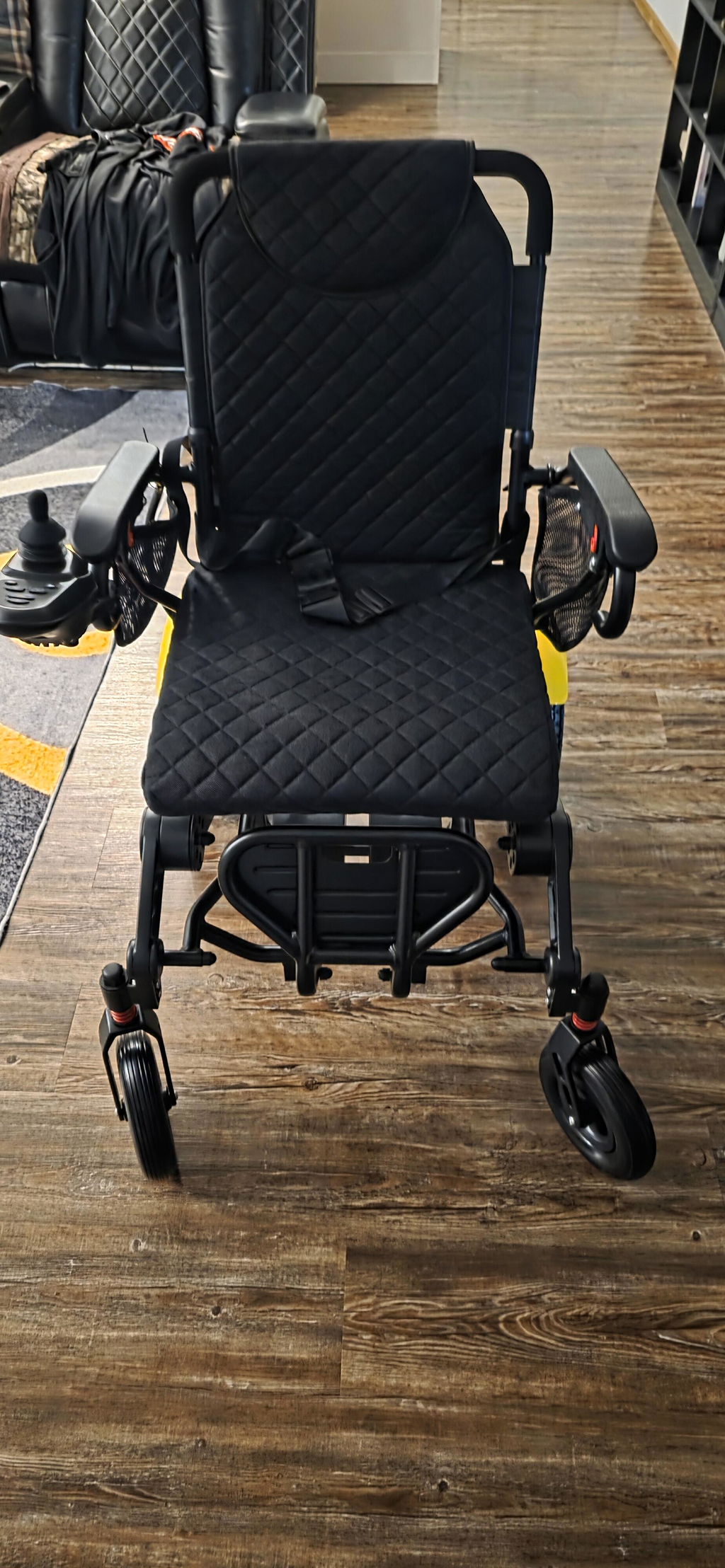
The DX08 isn’t just a wheelchair, it is a passport to reclaiming your ability to travel.
If lifting and transporting a heavier wheelchair has been a challenge, those practical details may make a meaningful difference to your outings.
It carries a 400-pound rating and weighs 40.6 pounds without the battery.
Quick answer: power wheelchair battery care
Use the charger that came with the chair, recharge after regular use, and don’t leave the battery sitting empty for days. Whether you can leave a power wheelchair plugged in all the time depends on the charger and battery design—so check the manual rather than following a one-size-fits-all rule.
Match the charger
Original or maker-approved only. A look-alike plug can still damage the pack.
Charge after use
Regular, shallower top-ups beat running empty and waiting days to plug in.
Unplug when full
Unless your manual says the charger is built to stay connected.
Stop on red flags
Swelling, an odd smell, heat, smoke or a damaged cable means stop and get help.

What you need
Power wheelchair battery care doesn’t take a toolbox. Keep the manual and the matching charger together so you always know which charger belongs to which chair.
Basic kit
The charger that came with your chair, a hard dry surface with some airflow, a soft dry cloth for the charging port, and a clear path so the cord isn’t a trip hazard.
Nice to have
A spare battery for long days, a padded pouch for travel, and a battery storage bag that keeps the pack and charger together.
Daily charging steps
A calm, repeatable routine is the heart of power wheelchair battery care and the easiest way to keep range predictable. Here’s the one we suggest for KERDOM chairs and most lithium folding power chairs.
Park and power off.
Pick a level, dry spot and switch the chair off at the joystick before you plug anything in.
Look over the cable and plug.
Frayed insulation, bent pins, scorch marks or a loose strain relief mean the charger needs replacing—not tape.
Connect the charger that came with the chair.
Plug into the controller port, or slide the battery out and charge it on a hard counter. Make sure the plug seats all the way.
Let the cycle finish.
A full charge on a KERDOM chair takes about 4–6 hours for DX07 and DX08 and 4–8 hours for DX06 with the included 2A charger. Overnight is fine with the original charger.
Unplug when it’s full.
Once the indicator shows a full charge, unplug unless your owner’s manual specifically says the charger is designed to stay connected.
Put the charger away.
Coil the cord loosely and keep it dry, off the floor and away from pets that like to chew.

Should you leave a power wheelchair plugged in?
It’s the question we hear most often. The honest answer: it depends on your charger and battery system. Here’s a practical default for each situation.
| Situation | Practical default | Check in your manual |
|---|---|---|
| Everyday use | Charge after the day’s outing. Overnight with the original charger is common. | Whether overnight charging is approved and when to unplug |
| Always plugged in | Only if the maker says the charger offers float or maintenance charging for that battery. | Don’t assume every “smart” charger is meant to stay on forever |
| After a full charge | Unplug when the cycle finishes instead of leaving it connected for days “just in case.” | Any maximum continuous charging time |
| Damaged or hot charger | Unplug it, don’t leave it unattended and contact support before the next charge. | Replacement charger part number for your model |
Bottom line: there’s no universal “always leave it plugged in” rule for every power chair. If your manual isn’t clear, ask KERDOM support with your model before you change your routine.
Storage and temperature
Storage is the part of power wheelchair battery care people skip most. Heat, freezing cold and a flat battery in storage are the three most common reasons a good battery ages early.
| Situation | What to do | Avoid |
|---|---|---|
| Day to day | Charge and store indoors at room temperature, roughly 50–77°F. | Hot cars, direct sun on the pack, freezing garages |
| A few days off | Leave the battery at a healthy charge and top it up before your next long outing. | Parking the chair empty “until next weekend” |
| Weeks or months | For lithium packs, store around half charge, remove the battery from the chair and top it up every 1–2 months. | Storing it flat-empty or on the charger for months |
| After cold weather | Bring the battery inside and let it warm to room temperature before charging. | Charging a battery that still feels cold to the touch |
Traveling with a power wheelchair battery
For car trips, keep the battery in the cabin rather than a hot trunk in summer, and protect the connectors from moisture and crushing. Flying is a different set of rules. According to FAA PackSafe guidance for wheelchairs and mobility devices, lithium-ion batteries for mobility devices can be up to 300 watt-hours, and you may carry one spare up to 300 Wh or two spares up to 160 Wh each in carry-on baggage—never checked.
To find your watt-hours, multiply volts by amp-hours: a 24V 12Ah pack is 24 × 12 = 288 Wh, so it’s under the limit, but you could bring only one spare that size. Removed batteries need their terminals protected, ideally in a padded pouch. Airlines can be stricter than the federal rule in 49 CFR 175.10, so call your carrier at least 48 hours before you fly.

Planning a bigger trip? Our guide to choosing an electric wheelchair for seniors covers folded sizes, car trunks and travel-friendly models.
Ports, terminals and connectors
Clean, dry connections keep charging reliable. What you can safely touch depends on the battery type.
Most folding chairs
Wipe dust from the charging port and battery contacts when everything is dry and off. Don’t open the case or try to clean inside. If a port is damaged, get a compatible replacement through support.
Only if the manual allows
Some older heavy chairs let owners inspect terminals for corrosion. Use only the methods your manufacturer lists. If you aren’t sure, treat the battery as sealed.
Common charging mistakes
These habits undo good power wheelchair battery care, shorten battery life or add avoidable risk. Fix them before you buy a new battery.
Using a look-alike charger
A plug that fits isn’t proof of the right voltage or charging profile. Stick with the charger that came with your chair or an approved replacement.
Running it empty and waiting
Deep discharge followed by days of sitting ages lithium batteries early. Shallower, regular top-ups are easier on the pack.
Copying someone else’s routine
Some systems allow float charging; others expect you to unplug. A neighbor’s habit may not match your chair.
Charging on soft surfaces
Beds, sofas and pillows trap heat. Charge on a hard, dry surface with some air around it.
Battery problems and first steps
Range feels shorter than usual
Most sudden range drops come down to a handful of everyday causes. Work through this quick checklist from top to bottom before you assume the battery is worn out.
| Check | What to look for | Quick fix |
|---|---|---|
| 1. Charge level | The charger stopped early, the plug wasn’t fully seated, or the chair sat unused for a few days after charging. | Recharge with the original charger until the indicator shows full, then test on a familiar route. |
| 2. Temperature | Range drops on cold mornings or after the battery spent the night in a cold garage or car. | Store and charge the battery indoors. Let a cold pack warm to room temperature before charging. |
| 3. Tires | Air-filled tires below the pressure printed on the sidewall, or solid tires that are worn, flat-spotted or rubbing on the frame. | Inflate air tires to the sidewall rating. Solid and puncture-proof tires need no air—check for wear and that the wheels spin freely. |
| 4. Load | Extra bags, a heavy backpack on the push handles, or a rider close to the chair’s weight limit. | Remove what you don’t need and stay well under the rated capacity (300–350 lb on most KERDOM folding models). |
If the chair still runs short after all four checks look normal, note your typical miles per charge and contact KERDOM support with your model. A pack that has lost a lot of capacity is a warranty or replacement question, not a DIY repair.
The chair won’t take a charge
Check the wall outlet, the charger’s indicator light and that the plug is fully seated. Reseat a removable battery until it clicks. Try only the original charger, and don’t probe the battery bay.
The charger feels warm
Mild warmth during a charge is normal. Hot to the touch, buzzing, a burning smell or discoloration means unplug it and replace the charger before the next overnight charge.
Error lights or sudden power loss
Power the chair off and on once if your manual allows it, and make sure the freewheel levers are set to drive. Recurring error codes or cutouts under light load need model-specific help, not a random charger swap.
When to call instead of DIY
Everyday power wheelchair battery care is charging habits and quick visual checks. Battery damage and electrical faults are stop-and-service problems.
Safety red flags
A swollen or cracked battery, leaking fluid, smoke, a burning-plastic smell, scorched connectors or a charger that trips the breaker. Unplug if it’s safe to do so, move people away and get help.
Model details speed things up
Your order number, the serial number on the frame, a photo of the battery label and the charger, and a short video of what the chair or charge light is doing.
KERDOM covers the frame, motors and battery for 5 years. Our support team replies within 4 business hours and walks you through charging, cable and controller checks first—see how KERDOM warranty and support work.
KERDOM chairs and spare batteries
Every KERDOM folding chair uses a removable 24V lithium battery that weighs about 4 lb and comes with its own charger. The same power wheelchair battery care routine applies to all of them. A spare battery is the simplest way to add range without buying a bigger chair—see the DX06 backup battery or DX08 backup battery, and match the battery to your exact model.
For everyday outings: DX07
The KERDOM DX07 runs up to 15.5 miles on its 24V 12Ah battery and recharges in about 4–6 hours. The slide-in battery locks into place without a wiring harness, so swapping or charging it indoors takes seconds.
“Getting out of the house should be about where you’re going, not how much effort it takes to bring your wheelchair along.”

Best for Everyday Outings
KERDOM DX07
36.5 lb carbon frame · removable battery · up to 15.5 mi
60-day home trial · Free U.S. shipping
Shop DX07 ›KERDOM DX07 key specs
- Weight36.5 lb without battery (41.5 lb with)
- Max user weight350 lb
- Seat width18.5" (adjustable toward 20")
- Motor2 × 180W brushless
- Battery & range24V 12Ah removable · up to 15.5 mi
- Top speed / climbing3.73 mph · up to 12°
- Folded size29 × 14 × 23 in
- ChargingController port or direct battery charging
For long days out: DX06
The KERDOM DX06 ships with two 24V 12Ah batteries for up to 30 miles total. Charge one while you use the other, and you rarely have to plan your day around an outlet.

Best Value for Long Days Out
KERDOM DX06
Two 12Ah batteries · up to 30 mi · 500W motor
60-day home trial · Free U.S. shipping
Shop DX06 ›KERDOM DX06 key specs
- Weight58.5 lb without batteries (62 lb with)
- Max user weight350 lb
- Seat width18.5"
- Motor500W (2 × 250W)
- Battery & rangeTwo 24V 12Ah · up to 30 mi
- Top speed / climbing4 mph · up to 15°
- Folded size37.8 × 19.7 × 33.5 in
- ChargingController port or direct battery charging
The bottom line
Power wheelchair battery care comes down to four habits: the right charger, a top-up after every outing, room-temperature storage and paying attention to warning signs. Your manual has the final word for your chair, and support is a quick message away when something feels off.
This article is part of our seniors’ mobility series. Next, compare models in Best Electric Wheelchair for Seniors in 2026, read Electric Wheelchair for Seniors: Benefits & How to Choose, or plan outdoor rides with our all-terrain electric wheelchair guide.
Frequently asked questions
Should I leave my power wheelchair plugged in all the time?
Only if your owner’s manual says the charger and battery are designed for continuous float charging. For most lithium folding chairs, including KERDOM models, charge after use and unplug once the indicator shows a full charge.
Is it OK to charge a power wheelchair overnight?
Yes, in most cases, as long as you use the original charger, charge on a hard surface and the cable and charger are undamaged. A KERDOM DX07 or DX08 battery typically fills in 4–6 hours, so it will be ready by morning.
How long does a power wheelchair battery last?
Lithium wheelchair batteries typically last about 3–5 years with regular use, depending on how often they are charged, how deeply they are drained and how hot or cold they are stored. KERDOM covers the battery under its 5-year frame, motor and battery warranty.
Can I use any charger that fits the plug?
No. A charger with the same plug can still deliver the wrong voltage or current, which can damage the battery or create a fire risk. Use the charger supplied with your chair or an approved replacement for your exact model.
How should I store a power wheelchair battery I won’t use for a while?
Good power wheelchair battery care for storage is simple: store the battery indoors at room temperature, at roughly half charge, and top it up every one to two months. Avoid leaving it fully empty, in a hot car or in a freezing garage.
Can I fly with my power wheelchair battery?
Usually, yes. FAA rules allow lithium-ion mobility batteries up to 300 Wh, and one spare up to 300 Wh or two spares up to 160 Wh each in carry-on baggage. A 24V 12Ah pack is about 288 Wh. Always call your airline ahead, since carriers can set stricter rules.
Why did my wheelchair’s range suddenly drop?
First confirm a full charge with the correct charger, then think about cold weather, hills, rider weight and speed. If range stays short after good charging habits, contact support with your model and serial number instead of swapping batteries yourself.
Which electric wheelchair is easiest for seniors to charge and live with?
Look for a removable lithium battery you can charge on a kitchen counter, a chair light enough for whoever does the lifting, and a spare battery option for long days. The KERDOM DX07 and DX06 are good starting points for most families. Compare models in Best Electric Wheelchair for Seniors in 2026.
I’m new to power wheelchairs. Where should I start?
Start with how the chair fits your week: seat width, who lifts it into the car, and where you will charge it. Then build simple charging habits from day one. Our guide to choosing an electric wheelchair for seniors covers benefits, sizing and your first weeks.