

How to Fly with an Electric Wheelchair: Complete 2026 Guide
Learning how to fly with electric wheelchair does not have to be stressful. With proper preparation and knowledge of current airline regulations, you can travel confidently with your power chair to any destination. This comprehensive guide explains how to fly with electric wheelchair step by step, covering airline rules for electric wheelchairs in 2026, from battery requirements and advance notice procedures to packing tips and damage protection strategies. Whether you are planning your first flight with a wheelchair or looking to streamline your travel routine, this guide has you covered.
How to Fly with Electric Wheelchair: Can You Bring It on a Plane?
Yes, you can absolutely bring an electric wheelchair on a commercial flight. Under the Air Carrier Access Act (ACAA) and the DOT Airline Passengers with Disabilities Bill of Rights, U.S. airlines are legally required to accept battery-powered wheelchairs as checked mobility devices, provided they meet specific safety requirements 1. This protection applies to both domestic and international flights operated by U.S. carriers.
However, electric wheelchairs cannot be used in the passenger cabin during flight due to size and weight constraints. Your wheelchair will be stored in the aircraft's cargo hold, and the airline must provide an aisle chair to help you reach your seat. The key to a smooth experience lies in understanding the battery regulations, notifying the airline in advance, and properly preparing your wheelchair for transport.
Airline Rules for Electric Wheelchairs in 2026
The regulations governing electric wheelchairs on aircraft are primarily determined by three authorities: the DOT (Department of Transportation), the FAA (Federal Aviation Administration), and the IATA (International Air Transport Association). In 2026, several updates have been implemented to improve the travel experience for wheelchair users 2.
Battery Requirements (Lithium-Ion vs Lead-Acid)
Battery type is the single most important factor determining whether your electric wheelchair can fly. Airlines classify wheelchair batteries into two categories, each with distinct handling requirements.
Lithium-ion batteries are the most common type in modern foldable electric wheelchairs. According to IATA 2026 guidelines 2, lithium-ion wheelchair batteries are permitted on aircraft under the following conditions:
|
Battery Specification |
Requirement |
|
Watt-hour rating |
Must be marked on the battery |
|
Under 100 Wh |
Permitted without special approval |
|
100-300 Wh |
Permitted with airline notification |
|
Over 300 Wh |
Generally not permitted on passenger aircraft |
|
Spare batteries |
Must be carried in cabin, terminals protected |
|
Removable batteries |
Must be removed and carried in cabin |
|
Non-removable batteries |
Must be securely attached, terminals protected |
The KERDOM DX07 uses a 24V 12Ah lithium-ion battery pack rated at 288 Wh (within the 100-300 Wh permitted range), and its battery is designed to be easily removable for airline compliance. The KERDOM DX04 battery is rated at 180 Wh, well within the standard allowance.
Lead-acid (gel/AGM) batteries are found in some older or heavier wheelchair models. These batteries can remain installed in the wheelchair during flight but must be secured upright to prevent leakage. Airlines may require the terminals to be insulated with tape or covers.
Size and Weight Limits
Airlines must accept wheelchairs that fit in the aircraft's cargo compartment. For most commercial jets, this is rarely an issue with foldable electric wheelchairs. However, regional aircraft with smaller cargo holds may have restrictions. The general guidelines are as follows:
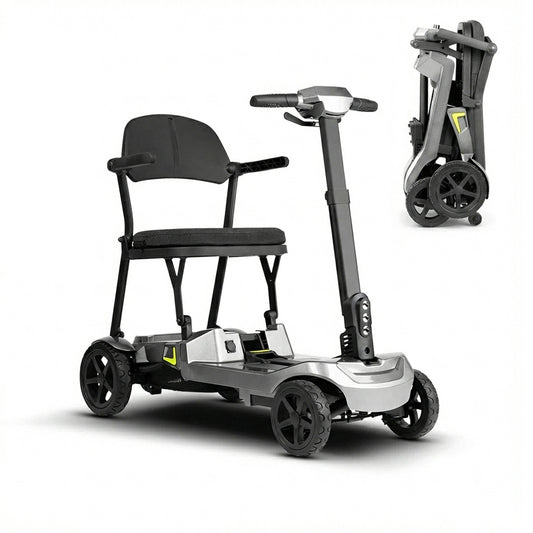
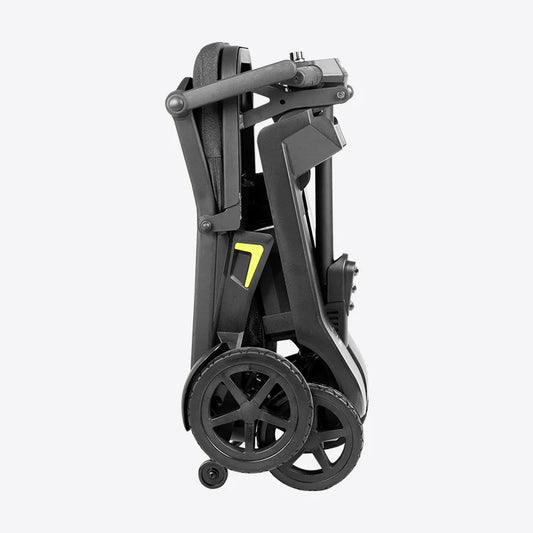
Most narrow-body aircraft (Boeing 737, Airbus A320) can accommodate wheelchairs with folded dimensions up to approximately 30" x 25" x 35". Wide-body aircraft (Boeing 777, Airbus A350) have significantly larger cargo holds with virtually no size restrictions for standard wheelchairs. The KERDOM DX07 folds to just 15" x 24" x 30", which fits comfortably in the cargo hold of any commercial aircraft.
Advance Notice Requirements
Airlines now require advance notice of at least 48 hours before departure when traveling with a power wheelchair 2. This allows the airline to arrange proper handling equipment and ensure cargo space is available. While many airlines accept shorter notice, providing 48-72 hours gives you the best chance of a smooth experience.
When notifying the airline, be prepared to provide the following information: wheelchair dimensions (folded and unfolded), total weight including batteries, battery type and watt-hour rating, whether the battery is removable or non-removable, and any special handling instructions.
Step-by-Step: How to Fly with Electric Wheelchair Safely
Follow these seven steps to master how to fly with electric wheelchair and ensure your power chair arrives safely at your destination.
Step 1: Verify your airline's wheelchair policy.
Call the airline's accessibility desk or check their website 48-72 hours before departure. Confirm battery requirements, size limits, and any airline-specific procedures. Each airline may have slightly different policies.
Step 2: Charge your battery fully.
A fully charged battery ensures you have mobility immediately upon arrival. However, note that some airlines may require batteries to be at a specific charge level — typically no more than 100% — for safety during transport.
Step 3: Prepare your battery for removal.
If your wheelchair has a removable lithium-ion battery (as most modern models do), practice removing and reinstalling it before your trip. You will need to remove the battery at the gate and carry it in the cabin. Protect the terminals with the provided covers or electrical tape.
Step 4: Document your wheelchair's condition.
Take clear, timestamped photos of your wheelchair from multiple angles before arriving at the airport. Document any existing scratches, dents, or wear. This photographic evidence is essential if you need to file a damage claim later.
Step 5: Attach handling instructions.
Print clear, laminated instructions for airline ground crew explaining how to fold, unfold, and handle your specific wheelchair model. Include diagrams if possible. The KERDOM DX07 comes with a user manual that includes handling instructions suitable for this purpose.
Step 6: Arrive early at the airport.
Plan to arrive at least 2.5-3 hours before departure for domestic flights and 3.5-4 hours for international flights. This extra time accounts for the wheelchair check-in process, TSA screening, and transfer to an aisle chair at the gate.
Step 7: Supervise the gate check process.
At the gate, watch as your wheelchair is tagged and handed to ground crew. Confirm that the handling tag includes "FRAGILE" and "THIS SIDE UP" markings. If possible, request that your wheelchair be loaded last and unloaded first to minimize handling time.
Major Airline Wheelchair Policies Compared
The following table summarizes the electric wheelchair policies of major U.S. airlines as of early 2026. Policies are subject to change, so always verify directly with the airline before travel.
|
Airline |
Advance Notice |
Li-Ion Limit |
Removable Battery |
Gate Check |
Damage Liability |
|
Delta |
48 hours |
300 Wh |
Required removal |
Yes |
Full replacement |
|
United |
48 hours |
300 Wh |
Required removal |
Yes |
Full replacement |
|
American |
48 hours |
300 Wh |
Required removal |
Yes |
Full replacement |
|
Southwest |
48 hours |
300 Wh |
Required removal |
Yes |
Full replacement |
|
JetBlue |
48 hours |
300 Wh |
Required removal |
Yes |
Full replacement |
|
Alaska |
48 hours |
300 Wh |
Required removal |
Yes |
Full replacement |
All major U.S. airlines are required by federal law to accept wheelchairs and provide full compensation for any damage that occurs during transport. If your wheelchair is damaged, report it immediately at the arrival gate before leaving the airport.
Best TSA-Approved Electric Wheelchairs for Travel
Not all electric wheelchairs are equally suited for air travel. The best travel wheelchairs combine lightweight construction, compact folding dimensions, compliant battery specifications, and durable construction that can withstand cargo handling. Based on our evaluation, the following models stand out for air travel:
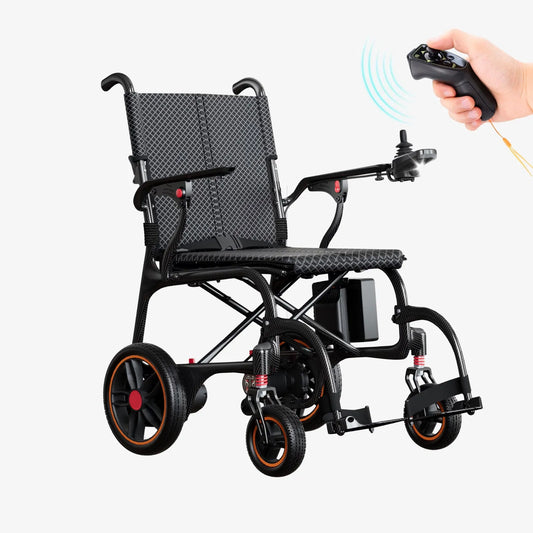
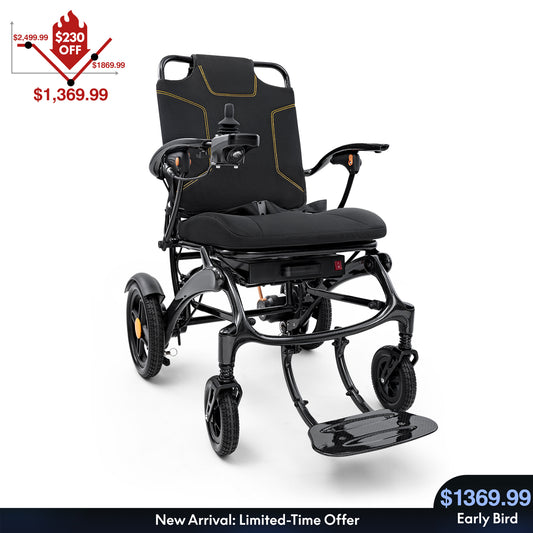
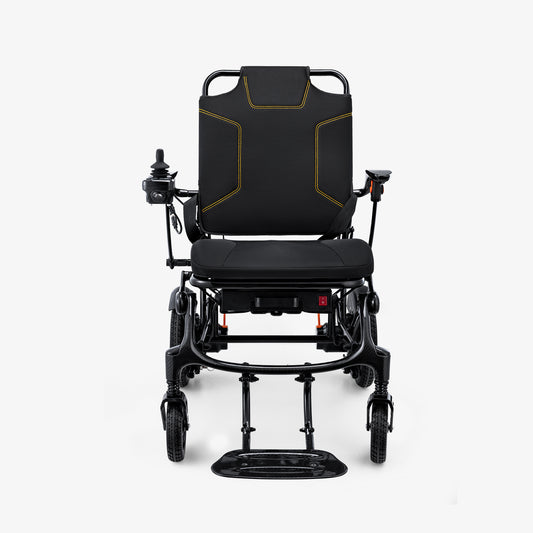
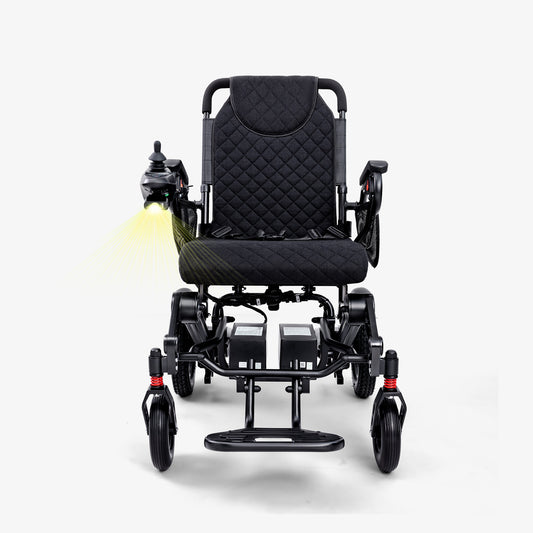
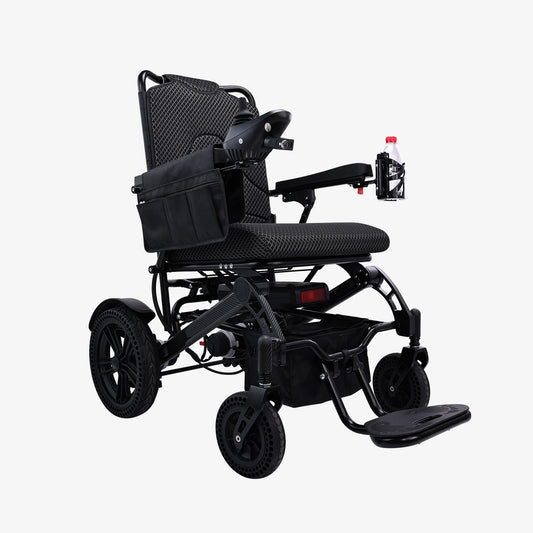
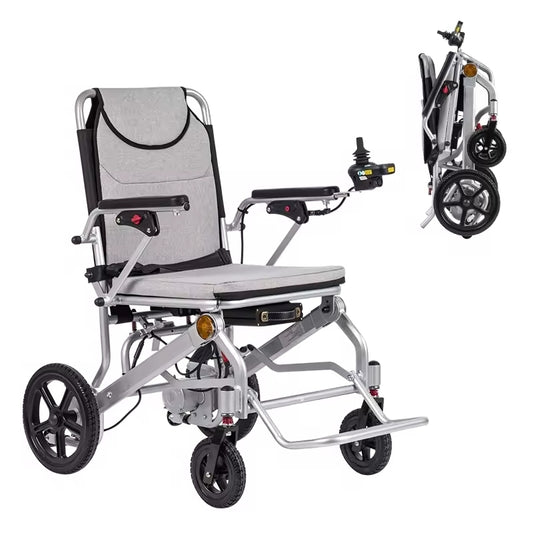
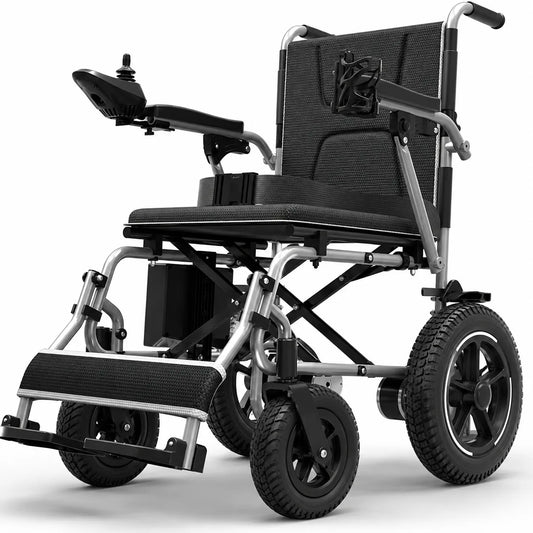
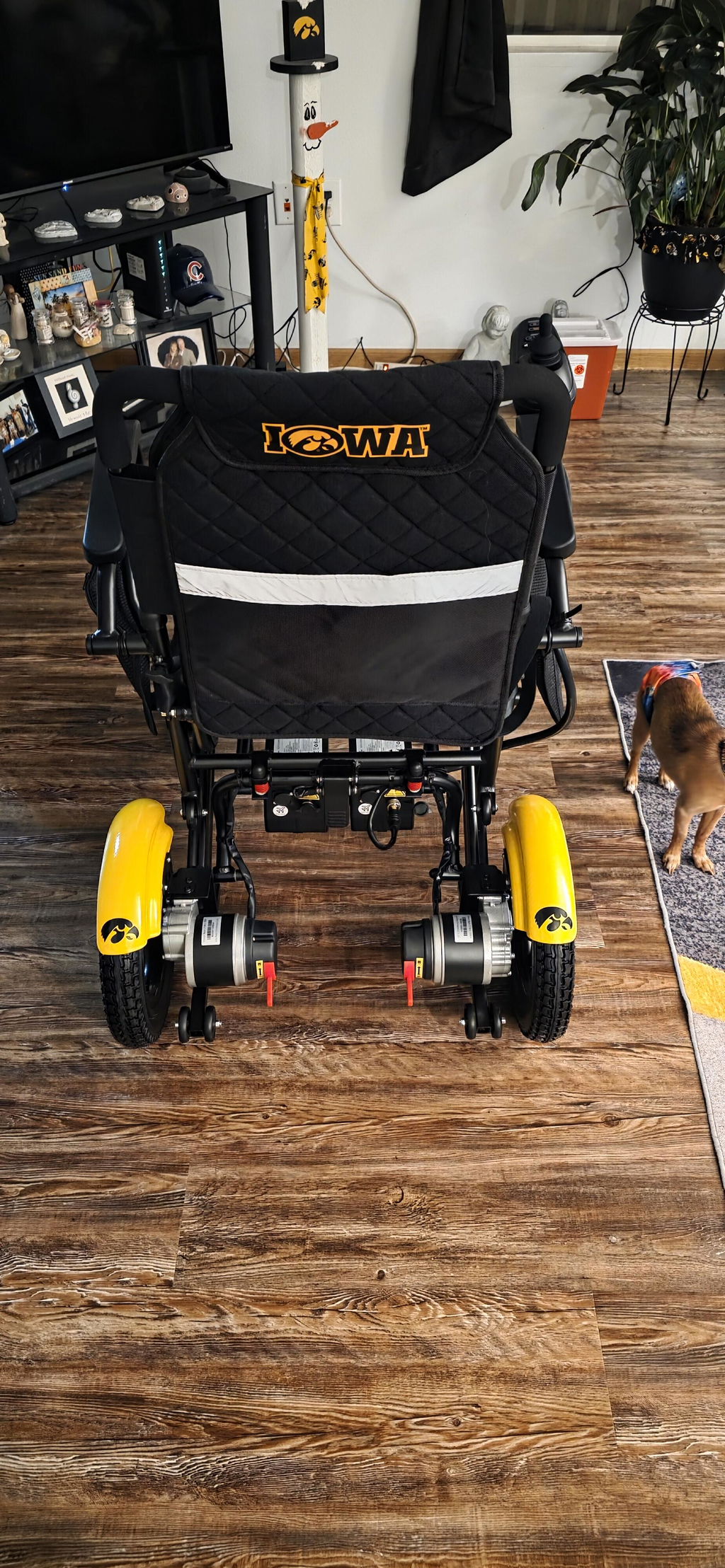
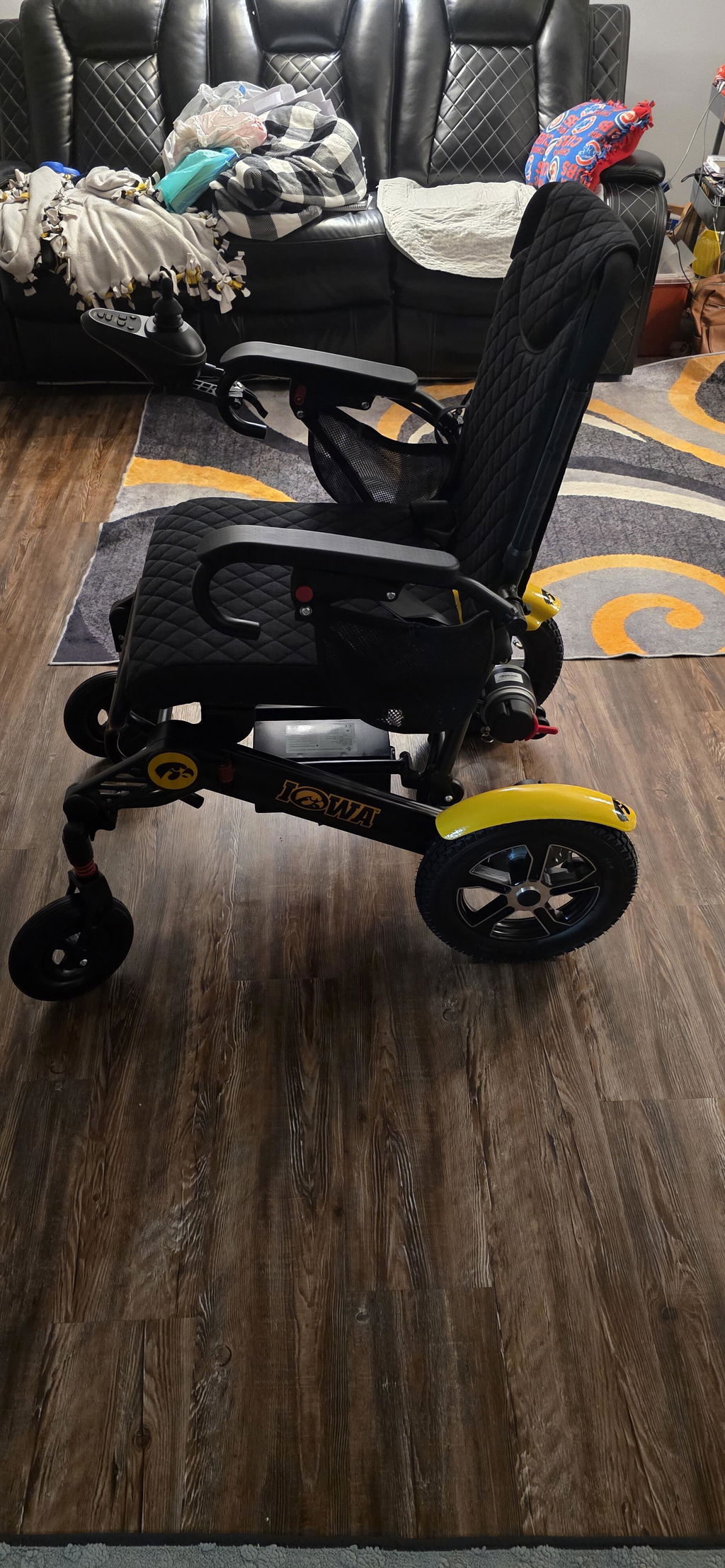
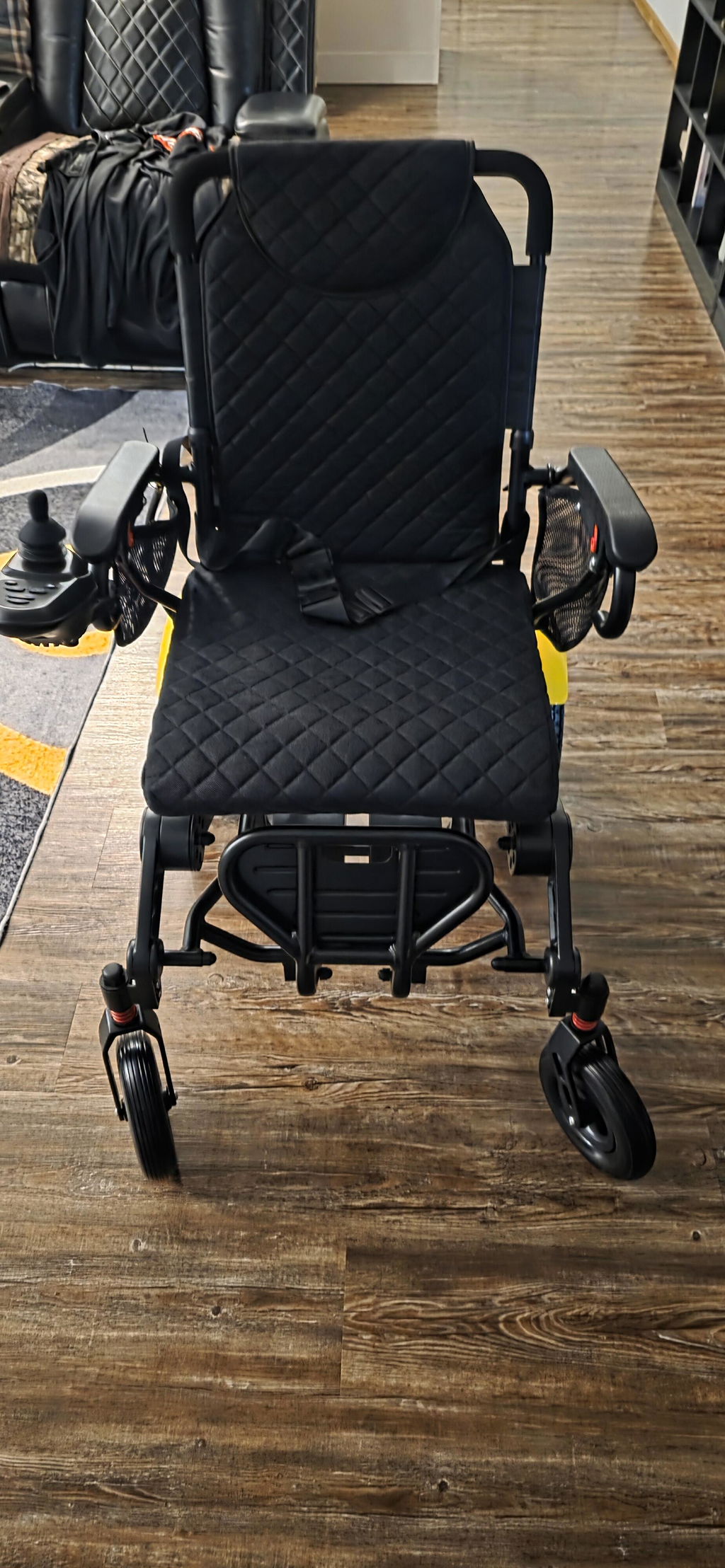
The KERDOM DX07 is our top recommendation for air travel, thanks to its 38-pound carbon fiber frame, compact 29" x 14" x 23" folded dimensions, and 288 Wh removable lithium-ion battery that meets all airline requirements. Its TSA-approved designation means it has been specifically designed and tested for hassle-free airport screening.
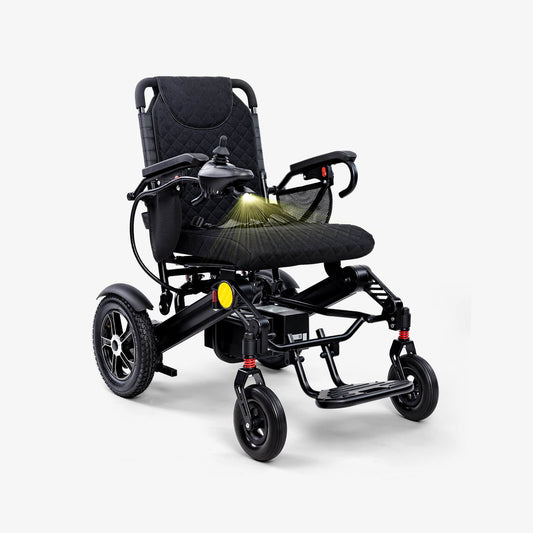
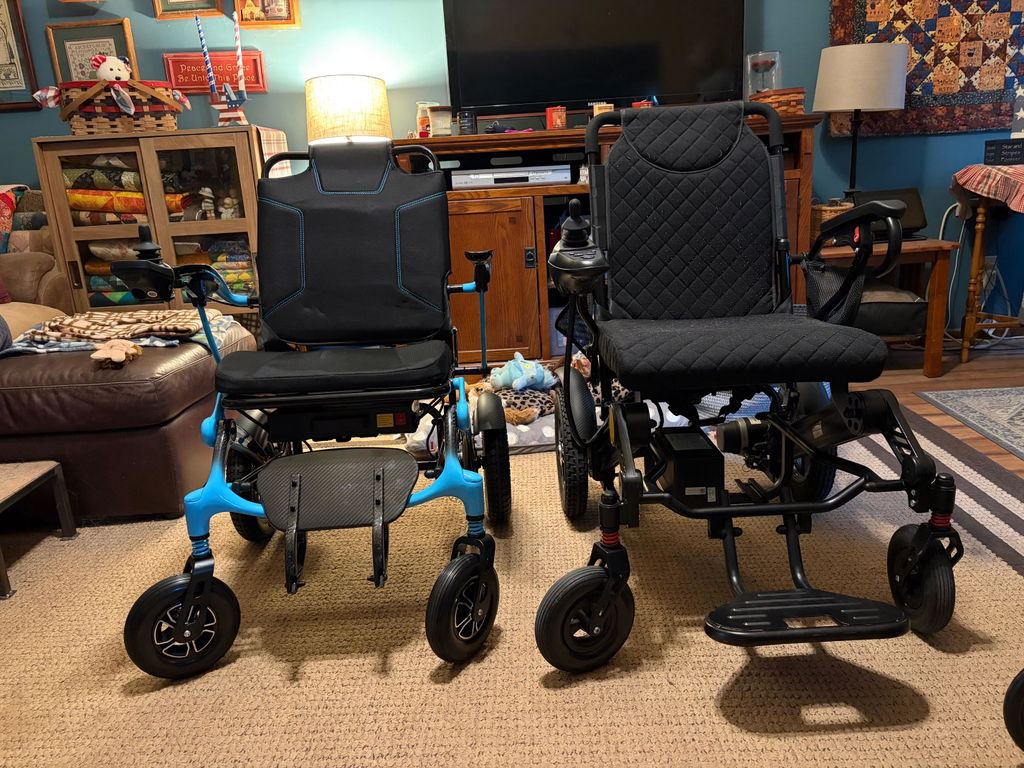
The KERDOM DX04 is an excellent budget-friendly travel option at just 33 pounds with a 180 Wh battery — well within the standard airline allowance without requiring special notification. For seniors who fly occasionally and want a reliable, affordable travel wheelchair, the DX04 offers outstanding value.
Explore the complete KERDOM Spring Travel Season collection for more travel-ready wheelchair options with free shipping and a 5-year warranty.
What to Do If Your Electric Wheelchair Is Damaged During a Flight
Even when you know how to fly with electric wheelchair properly, damage during air travel can still occur. The DOT requires airlines to accept liability for damage to wheelchairs and other assistive devices. If you discover damage upon arrival, take the following immediate steps:
Report the damage to airline staff before leaving the airport. Request a written damage report and keep a copy. Take photographs of all damage alongside your pre-flight documentation photos. File a formal claim with the airline's customer service department within 24 hours. The airline must repair or replace your wheelchair, or reimburse you for the full replacement cost. If the airline does not resolve your claim satisfactorily, you can file a complaint with the DOT Aviation Consumer Protection Division.
Frequently Asked Questions
Can I use my electric wheelchair at the airport?
Yes, you can use your electric wheelchair throughout the airport — at check-in, through security screening, at restaurants and shops, and all the way to the boarding gate. You will only need to transfer to an airline-provided aisle chair at the gate for boarding. Your wheelchair will be gate-checked and returned to you at the arrival gate.
Do I need to remove the battery from my electric wheelchair for a flight?
For wheelchairs with removable lithium-ion batteries, yes — airlines require you to remove the battery and carry it in the passenger cabin. The battery terminals must be protected against short circuits using covers or tape. For wheelchairs with non-removable batteries, the battery can remain installed but must be disconnected and the terminals insulated.
How do I know if my wheelchair battery meets airline requirements?
Check the label on your battery for the watt-hour (Wh) rating. Batteries under 300 Wh are generally permitted on all commercial flights. You can calculate the watt-hour rating by multiplying the voltage (V) by the amp-hour (Ah) capacity. For example, the KERDOM DX07's 24V x 12Ah battery equals 288 Wh.
Will the airline charge me for checking my electric wheelchair?
No. Under the Air Carrier Access Act, airlines cannot charge passengers for transporting wheelchairs or other assistive devices. Your wheelchair is checked free of charge and does not count toward your baggage allowance.
What if my wheelchair doesn't fit in the cargo hold?
This is extremely rare with modern foldable electric wheelchairs. If it does occur, the airline must make reasonable efforts to accommodate your wheelchair, which may include using a different aircraft or booking you on an alternative flight. Contact the airline's accessibility desk well in advance to confirm compatibility.
How should I prepare my wheelchair joystick for flight?
Remove the joystick controller if it is detachable and carry it in your cabin baggage. If it is not removable, protect it by wrapping it in bubble wrap or a padded cover. The joystick is the most vulnerable component during cargo handling.
Can I bring a spare wheelchair battery on the plane?
Yes, spare lithium-ion batteries under 300 Wh can be carried in the passenger cabin (not in checked luggage). Each battery must have its terminals protected, and most airlines allow up to two spare batteries per passenger. Always check with your specific airline for their spare battery policy.
What is the best electric wheelchair for frequent flyers?
The KERDOM DX07 is our top recommendation for frequent flyers due to its ultralight 36.5-pound carbon fiber frame, TSA-approved designation, compact folding dimensions, and airline-compliant 288 Wh removable battery. For budget-conscious travelers, the KERDOM DX04 at 33 pounds with a 180 Wh battery offers excellent value. See our complete best electric wheelchair for seniors guide for detailed comparisons.








No comments





0 comments