Shop for Airline and TSA Approved power wheelchairs

Don’t let limited mobility keep you from exploring your world. Check out the Kerdom® Power Chairs line to find a travel power wheelchair that meets your travel needs. 
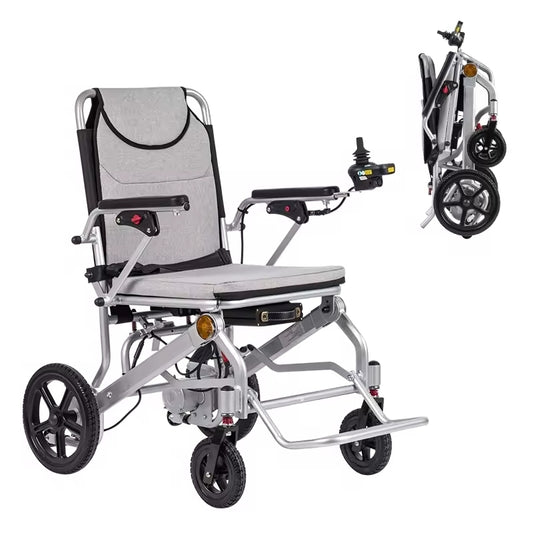
Whether you are riding the rails or cruising the seas, you need a travel power wheelchair that is lightweight and portable, like the DX08 Ultra Light power chair that folds in seconds and weighs 25.8 pounds, Consider a Kerdom DX07/DX08 travel power wheelchair for your next adventure.
Shop for TSA-approved power wheelchairs that are designed for travel.

KERDOM Model “DX07” 
With Carbon Fiber Technology, the Kerdom® Carbon Power Wheelchair Becomes Your Greatest Travel Companion

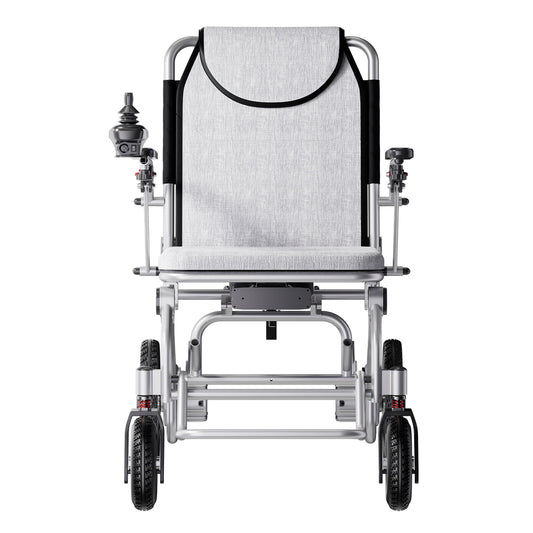
Travel smarter with the KERDOM DX07 carbon fiber electric wheelchair—lightweight, foldable, and designed for comfort, portability, and everyday mobility.
Discover the KERDOM DX07, a lightweight carbon fiber power wheelchair built for travel, easy lifting, and smooth daily mobility.

✅ What we love about this chair:

  • Only 38 lbs — Ultra-lightweight, carbon fiber frame specifically designed for traveling
  • Folds in 3 seconds — no tools or disassembly required
  • FAA-approved standard battery — fly without stress
  • Sleek, compact shape fits in cars, closets, and overhead bins
  • 350 lb. weight capacity
  • When folded 28.3"x12.2"x24"
  • Top speed of up to 3.7 mph
  • Accommodating 23″ Space Between Armrests

KERDOM Model “DX08” 
A unique lightweight mobility solution - 25.8 Lbs

At first glance, the Kerdom® Carbon DX08 may look like our other lightweight power wheelchairs but what stands out is its “X-frame” design, which allows this unit fold vertically, coming together in a compact bundle that is easy to lift, store, and transport.

The Kerdom® Carbon DX08 is a power wheelchair that folds vertically thanks to its innovative X-frame design. Weighing in at approximately 25.8 lbs. without the battery, it’s the ideal mobility device for journeys near and far. The strong carbon fiber frame makes it durable, portable, and safe so you can discover your independence and travel worry-free.

✅ What we love about this chair:

  • X-frame design allows the unit to fold flat in vertical position
  • Weighs about 25.8 lbs. without the battery
  • Advanced, durable, and lightweight 100% carbon fiber frame
  • Folded dimensions: 24.8” L x 10” W x 28” H
  • Collapsible back handles
  • Airline-compliant lithium battery** (10 Ah only)
  • Adjustable footrests
  • Battery range of up to 15 miles

Top-Rated Lightweight Travel Wheelchairs

“DX08” Carbon Fiber Remote-Controlled Wheelchair
5_star
(80 reviews)
$169.99
“DX07” Ultra-Light Carbon Electric Wheelchair
5_star
(100 reviews)
$169.99
“DX04” Folding Power Wheelchair "World's Lightest"
5_star
(120 reviews)
$789.99
download__14_-_-png

Who Are Airline-approved wheelchairs Best For?

  • Want a power wheelchair that folds into one piece

  • Travel frequently and need easy trunk storage

  • Prefer minimal setup with no tools required

  • Want a higher-end travel power wheelchair solution

"My wheelchair has given me the freedom to go anywhere I want to! It has completely changed my quality of life! I couldn’t be happier!"- Jane T., 67, Independent and Adventurous

Key Things to Consider Before Buying

  • Battery & Travel Rules

    Lithium-ion batteries must be removed and can typically be carried as a carry-on item, with limits (e.g., under 300Wh) for safety.
  • Lightweight & Foldable

    Designed to be easily folded and carried, often weighing under 60 lbs without batteries, for transport in cars or onto planes
  • Comfort & Fit

     Folded dimensions allow them to fit in car trunks or sometimes even overhead bins.
20251015-155326_1
20260113-140110

How to Fly with Kerdom Wheelchair

With the right preparation and understanding of airline policies and FAA   regulations, you can enjoy a smooth journey from check-in to arrival. This guide covers every step, from planning ahead to handling your wheelchair on the ground.
(Common airline policy pages:
· American Airlines: https://www.aa.com
· Delta Airlines: https://www.delta.com
· United Airlines: https://www.united.com)
1. Know Your Rights Before You Book
Under U.S. law — the Air Carrier Access Act (ACAA)   — airlines cannot discriminate against passengers because of a disability. 
This means:
· You cannot be denied boarding solely due to disability.
· Airlines must provide assistance with boarding, deplaning, and connections.
Assistive devices (including wheelchairs) are treated with priority and do not count toward your carry-on baggage limit.
· Even when flying internationally, many foreign carriers follow similar accessibility policies, and it’s wise to confirm before you travel.

2. Plan Ahead — Check Airline Policies
Each airline has its own procedures for handling mobility devices. Before your trip:
· Review airline wheelchair rules on their official site.
· Note requirements for powered wheelchairs, battery types, and documentation.
· Call customer service if anything is unclear — they may answer questions faster than online FAQs.
Commonly, airlines follow FAA-informed guidelines but can add specific restrictions (e.g., advance notice or documentation).

3. Prepare Your Chair & Batteries
· Before your trip, check your Kerdom Wheelchair to make sure it doesn’t need any repairs or maintenance. If you notice any issues, reach out to our Service Team at +1(775)572-5299 before your flight. Traveling with a fully operational chair ensures a hassle-free experience.
· FAA guidance for mobility devices with lithium batteries emphasizes:
Batteries must be protected from short-circuit damage.Depending on design, batteries may need to be carried onboard or remain installed if manufacturer design allows.
⚠️ Always check your specific airline’s policy for battery handling.

4. At the Airport — Arrive Early & Self-Identify
Arrive at the airport early to allow extra time for security checks and boarding. You can drive your Kerdom wheelchair around the airport! Use it to visit restaurants, restrooms, shops, or simply relax at your gate.

5. Gate Check vs. Cabin Stowage
Powered Wheelchair typically cannot be stored in the cabin due to size and battery safety rules.These chairs will be gate-checked, meaning they are taken at the aircraft door and returned to you at the exit.
✅Always ask ground staff to tag your chair for gate check instead of standard baggage, which reduces handling damage risk.
20260113-140220
6. Safety and Handling of Your Chair
When ground staff receive your wheelchair:
· Request they handle it with care and confirm how it will be stowed.
· Safely detach the joystick and carry it onboard as a personal item to prevent damage.
· Take photos before the wheelchair is accepted—this aids in potential claims.
While mishandling occasionally occurs, proactive measures reduce risks and enhance accountability.

7. After the Flight — Retrieval
Airlines are required to return your wheelchair promptly at the aircraft door, unless you choose baggage claim instead.
Check your wheelchair immediately for:
· Missing parts
· Damage
· Battery displacement

If you notice issues, speak with airline ground staff or the Complaints Resolution Official (CRO) at the airport for assistance — you have the right to file claims if necessary.

Hear From the Experts
Electric Wheelchairs Reviews

Travel Powerchair FAQ

1. Which wheelchair is the best for portability?

Models that disassemble or fold are the most portable. Note the size and weight when folded. Make sure you or your caregiver can lift the heaviest part and that it fits in the vehicle you are going to use for transport. The DX08 is one of the top models for portability.

2. Which wheelchair is best suited to travel by bus?

If it is a regular bus, make sure the width and turn radius of the chair will fit through the aisles and make the turns necessary to ingress and egress. Almost any model will fit on handicapped buses.

3. Can I use a travel powerchair outdoors?

Yes. Travel powerchairs are designed for both indoor and outdoor use, especially on smooth, flat surfaces like sidewalks, theme parks, cruise decks, and shopping centers. While they can handle light outdoor terrain, they're not ideal for rough trails or off-road surfaces due to their smaller wheels and lighter frames.

4. How long does it take to charge the battery?

Most travel powerchair batteries take 4–6 hours to fully charge, depending on the model and battery size. Many users charge their batteries overnight so the chair is ready for the next day's travel or excursions.

5.Can I bring a spare battery when traveling?

In most cases, yes. Airline-approved lithium batteries often have a watt-hour rating that allows you to bring a spare battery in your carry-on. Always check your airline's specific rules, and keep battery labels visible for easy inspection.

6.Are travel powerchairs comfortable for all-day use?

Travel powerchairs offer good comfort for daily outings, but their seating is typically lighter and more compact than full-size powerchairs. Many users add cushions or back supports for extended comfort during long days at theme parks or on vacation.

7. Can I drive my travel powerchair right up to the airplane door?

Yes. Most airlines allow you to ride your powerchair to the boarding gate. At the aircraft door, staff will take the chair and store it in the cargo hold. Make sure the battery is removed if required and that the chair is in travel or "freewheel" mode.

8. Does it come assembled?

Yes. Kerdom Wheelchair comes fully assembled. Simply attach the removable joystick and batteries and you are ready to go in less than 5 minutes.

9. Are travel powerchairs suitable for taller or shorter users?

Yes, but sizing varies by model. Features like adjustable armrests, adjustable footrests, seat height options, and seat width choices help fit users of different sizes. If someone is over 6 ft tall or under 5 ft, checking measurements before purchasing is important.

10. What is an airline-approved wheelchair?

To be considered “airline-approved”, a wheelchair must meet specific airline requirements, especially concerning battery safety and portability. Battery Type & Capacity: Most airlines follow FAA guidelines, which allow lithium-ion batteries of up to 300Wh in capacity. Batteries above this limit may be restricted